
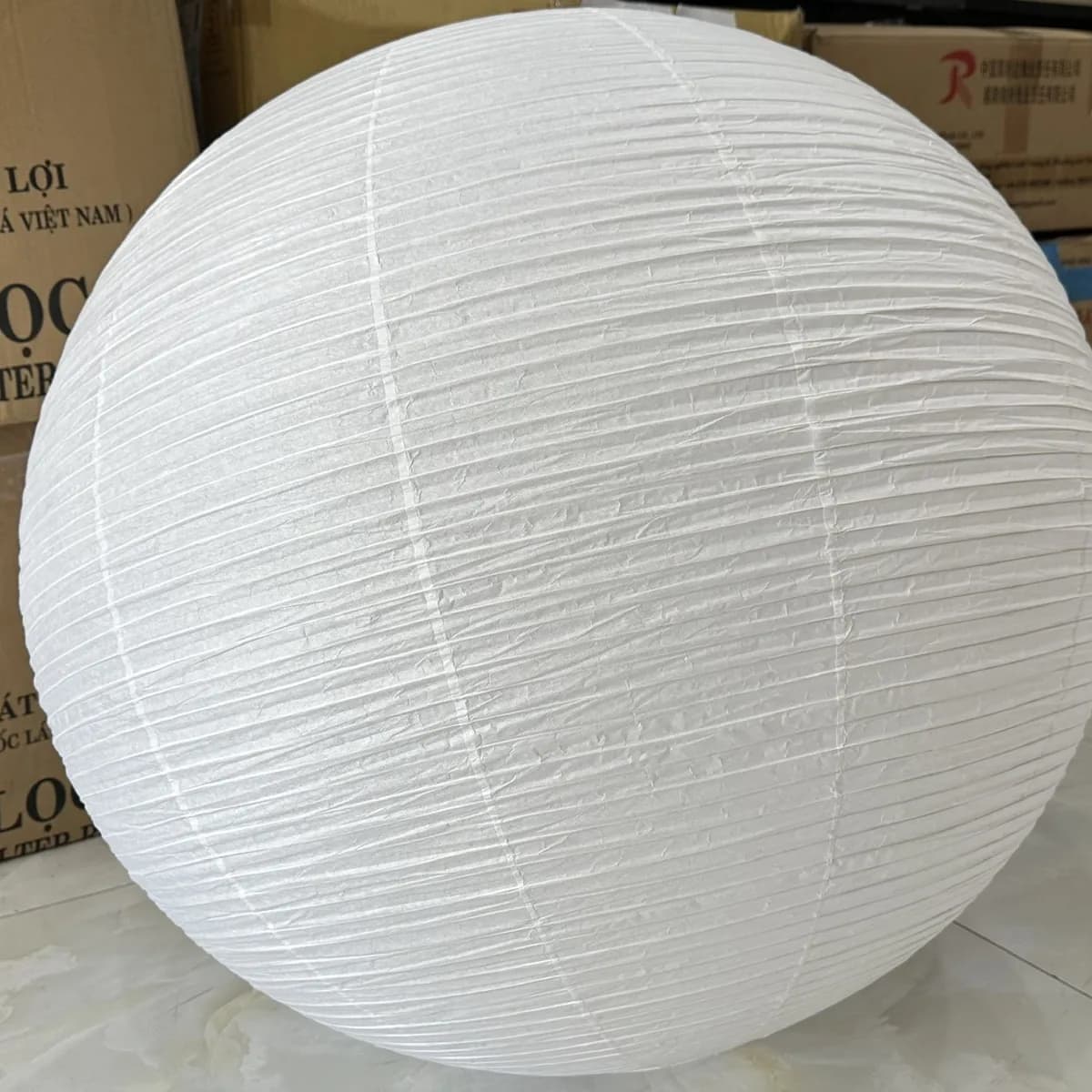

Set of 5 — Crushed fabric decorative lamp for cafés
from $400Get quote
What Wabi-Sabi Means For A Lamp
Wabi-sabi is a Japanese aesthetic built around imperfection and impermanence — a rough edge, an uneven surface, a colour that looks like it has already aged. Translated into a lamp, it means fabric with real texture instead of a smooth, machine-finish cloth, a frame that isn’t forced into perfect symmetry, and light that is deliberately dim and warm rather than bright and even.
Whether you came here searching for a single zen lamp, a Japanese pendant light for a dining table, or wabi-sabi lighting fixtures specifically, the same five principles below apply to all of them.

From the Collection
These pieces are drawn from KAHA's hospitality range — hotel suites and cafe/izakaya spaces built around the same rough linens and warm low light wabi-sabi calls for.


Indicative unit price, ex-works Ho Chi Minh City. Excludes freight, insurance and duties. Volume pricing confirmed on quotation.
Wabi-Sabi Lighting Design
Wabi-sabi lighting is a set of qualities, not a single look — every fixture KAHA builds in this style is checked against the same five principles.
Brushed linen, raw tussah, vintage goatskin — cloth with uneven grain and a handmade surface. No glossy synthetic fabric; a shine reads as artificial.
Shapes that are not perfectly even — a drum that isn’t a true circle, a cone with an uneven taper. Imperfection reads as the maker’s hand, not a flaw.
Fabric with a “lived-in” texture — pre-washed linen, unevenly spun tussah, vintage-grain goatskin. Wabi-sabi favours the beauty of ageing over anything new-looking.
Brown, olive, ochre, charcoal, terracotta — the palette of soil, stone and weathered wood. Stark white and cool Scandinavian grey belong to Japandi, not wabi-sabi.
2200–2700K warm white at low lumen output, closer to candlelight than task lighting. The goal is soft shadow, not bright, even illumination.
Seeing Each Principle
Five small diagrams, one per principle — each an abstract illustration of the idea rather than a literal photo.

Rough texture
Asymmetry
Patina
Earth tone
Warm, low light
Fabric Choice
Almost every wabi-sabi piece KAHA builds uses one of three cloths — each with its own kind of imperfection.
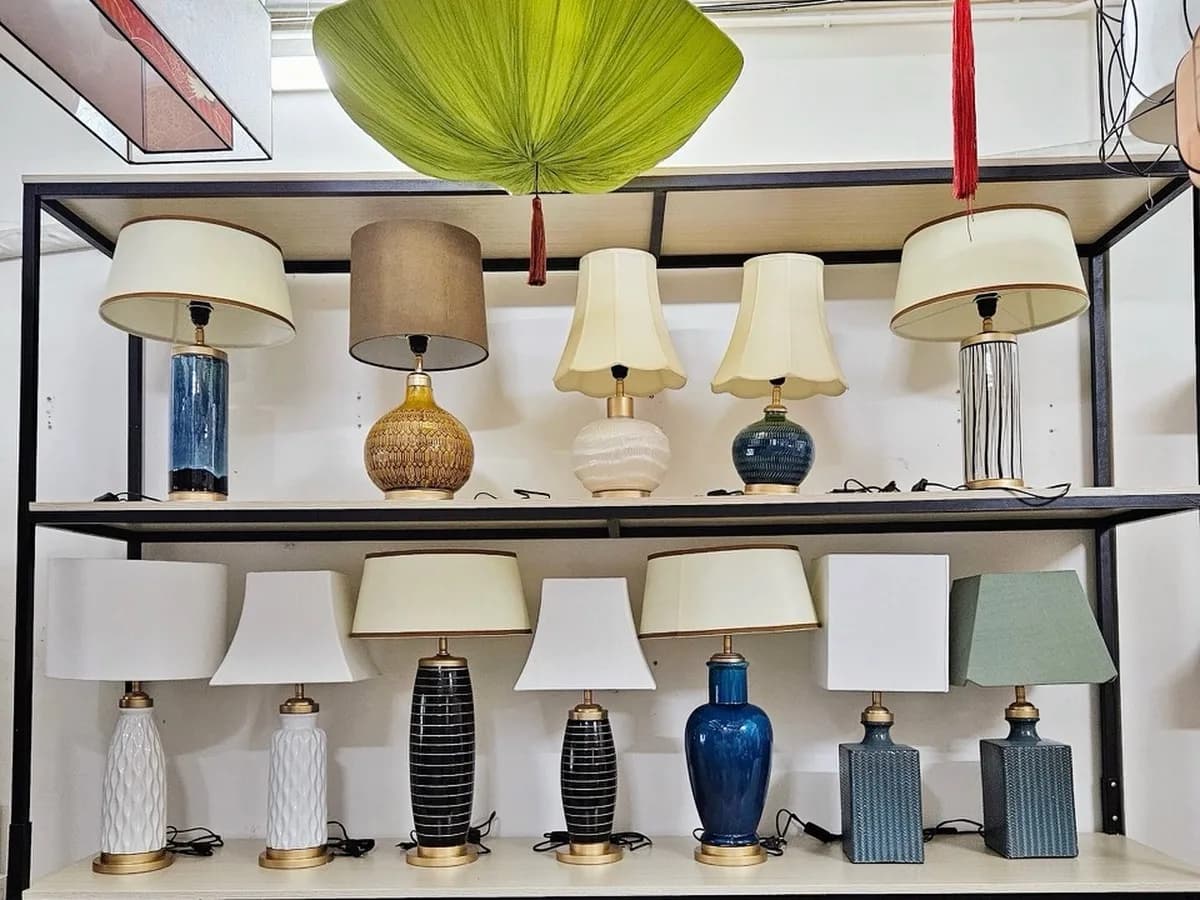
The most common wabi-sabi fabric — visible slub and grain, pre-washed for a softer, already-aged look.
Undyed and unevenly spun by nature — no two panels catch light quite the same way.
Distinctive natural grain, water-resistant, ages further with handling rather than degrading.
The Earth-Tone Palette
Wabi-sabi’s palette stays in the earth-tone range — charcoal, brown, olive, ochre, sand, ivory, moss and terracotta. Frames are usually powder-coated in a matching dark or rust finish rather than a bright or metallic colour.
It’s worth being precise about the difference from Japandi: Japandi blends Japanese minimalism with Scandinavian design — cooler greys and whites are part of that mix. Wabi-sabi, on its own, stays warm and earthen throughout.
Earth tones only — no stark white, no cool grey.

Light Quality
The single biggest difference between a wabi-sabi lamp and a standard fixture isn’t the fabric — it’s how the light behaves once it’s switched on.

Soft, warm-toned light at low output, cast through a fabric shade — shadow and softness are part of the effect, not something to eliminate.
Even, bright, cool-toned light designed to remove shadow entirely — the right choice for a reading desk or a kitchen counter, but not this aesthetic.
Where This Style Works
Wabi-sabi lighting is applied differently depending on the room — a tea room wants almost no light at all, while a cafe cluster still needs to do useful work.
Hung low 1.6–1.8 m · 2200K · dimmer required
A single focal point rather than a functional light source — a charcoal linen drum shade casts soft shadow on limewashed or clay walls.
Hung 2.4–2.8 m · 2700K · centrepiece
Undyed raw linen keeps its natural cream-gold tone. Pairs with a low platform bed and a rust or charcoal iron frame.
Hung 1.8–2.2 m · 2700K · 35–45 cm spacing
A cluster of vintage goatskin bell shades set at slightly uneven spacing — wabi-sabi avoids a perfectly even cluster rhythm.
Shape Options
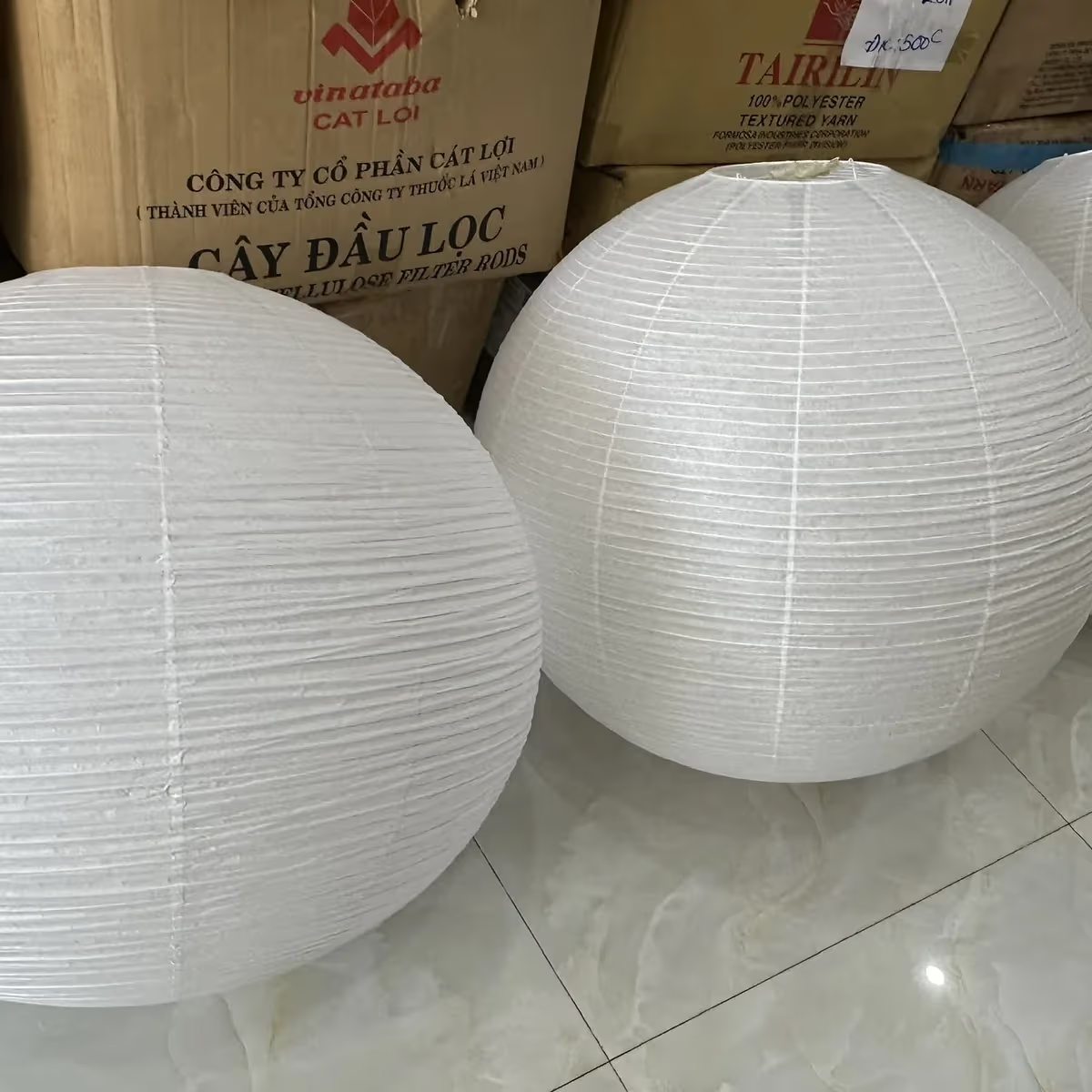
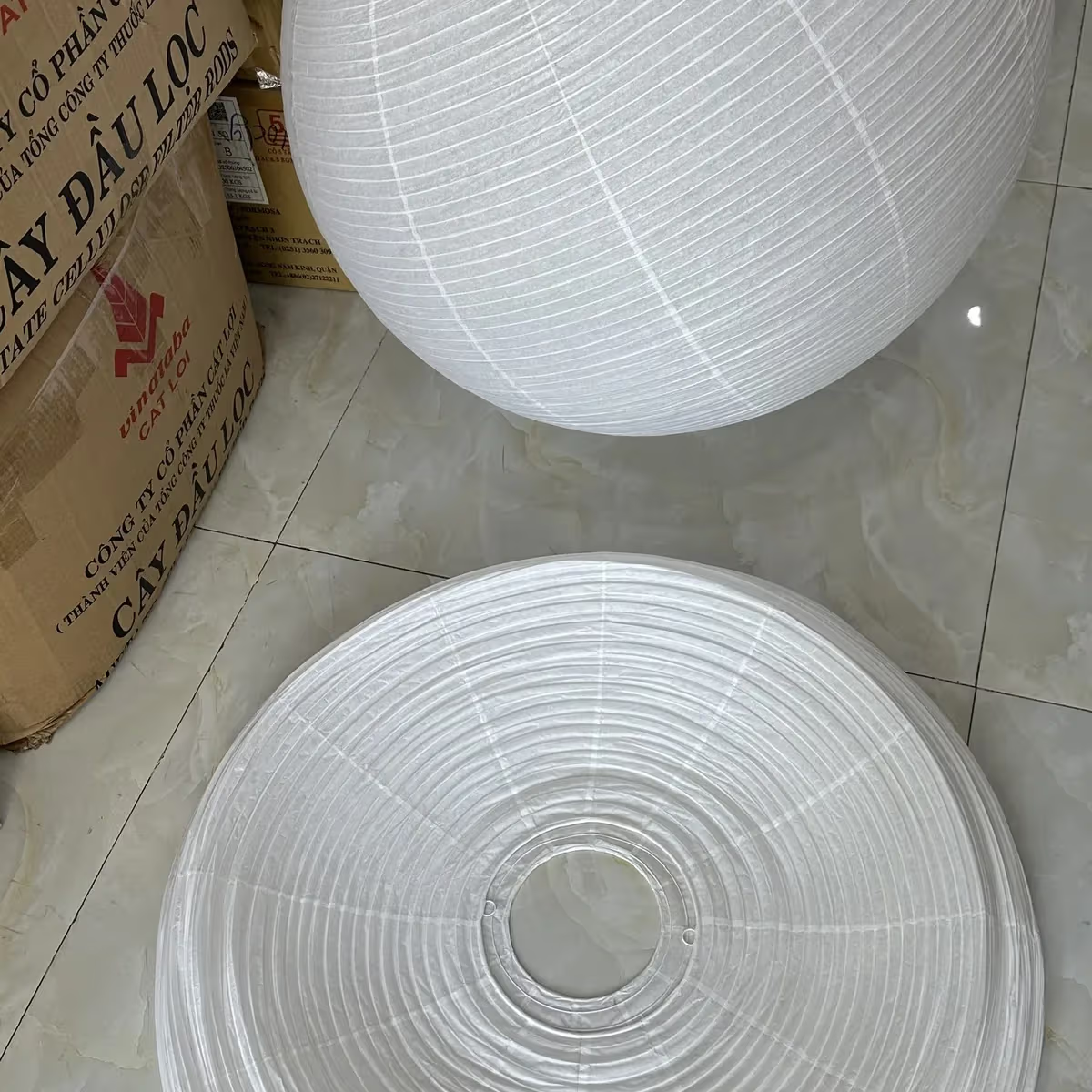
The shape matters less than the fabric and light — these six cover most of the pieces built in this style.

Bedside pieces — the most common shape for a single reading light.
An even, modern cylinder — living rooms, entry halls.
A softer, classic Asian silhouette — tea rooms, spas.
A gentler outline than drum or cone — quiet reading corners.
Straighter lines — leans closer to Japandi than pure wabi-sabi.
A straight-sided tube — izakaya counters, modern dining.
Not the Same as Japandi
The two get mixed up often enough to be worth separating clearly before choosing a fabric.
All-natural, uneven texture
Natural texture, mixed with smooth Scandi finishes
Warm earth tones only
Earth tones plus cool grey and white
Asymmetric, imperfect form
Clean-lined, minimalist geometry
Warm, low, shadow-forward light
Bright, even, functional light
Looking for the Scandinavian-influenced version instead? See our fabric range overview, or ask on WhatsApp for Japandi-specific pieces — the fabric library is the same, the palette and framing differ.
Japandi Lighting Ideas, By Room
Japandi keeps the natural fabric and warm light of wabi-sabi but folds in Scandinavian restraint — cooler tones, more symmetry, simpler lines. Same fabric library, different fixture choice depending on the room.

A pair of small drum or bell shades either side of the bed reads as Japandi rather than wabi-sabi when the fabric is a plainer, evenly toned linen and the two sit in exact symmetry. See table & bedside lamps for bedside-specific sizing.
A single larger pendant or a small floor-standing piece works as a Japandi living room centrepiece — natural linen or raw tussah over a simple iron frame, without the deliberate asymmetry a pure wabi-sabi room would use.
An evenly spaced cluster of two or three fabric pendants over the table — even spacing is the Japandi tell, versus the uneven wabi-sabi spacing described above. See our fabric pendant lights page for cluster sizing.
Fabric as a Rice Paper Alternative
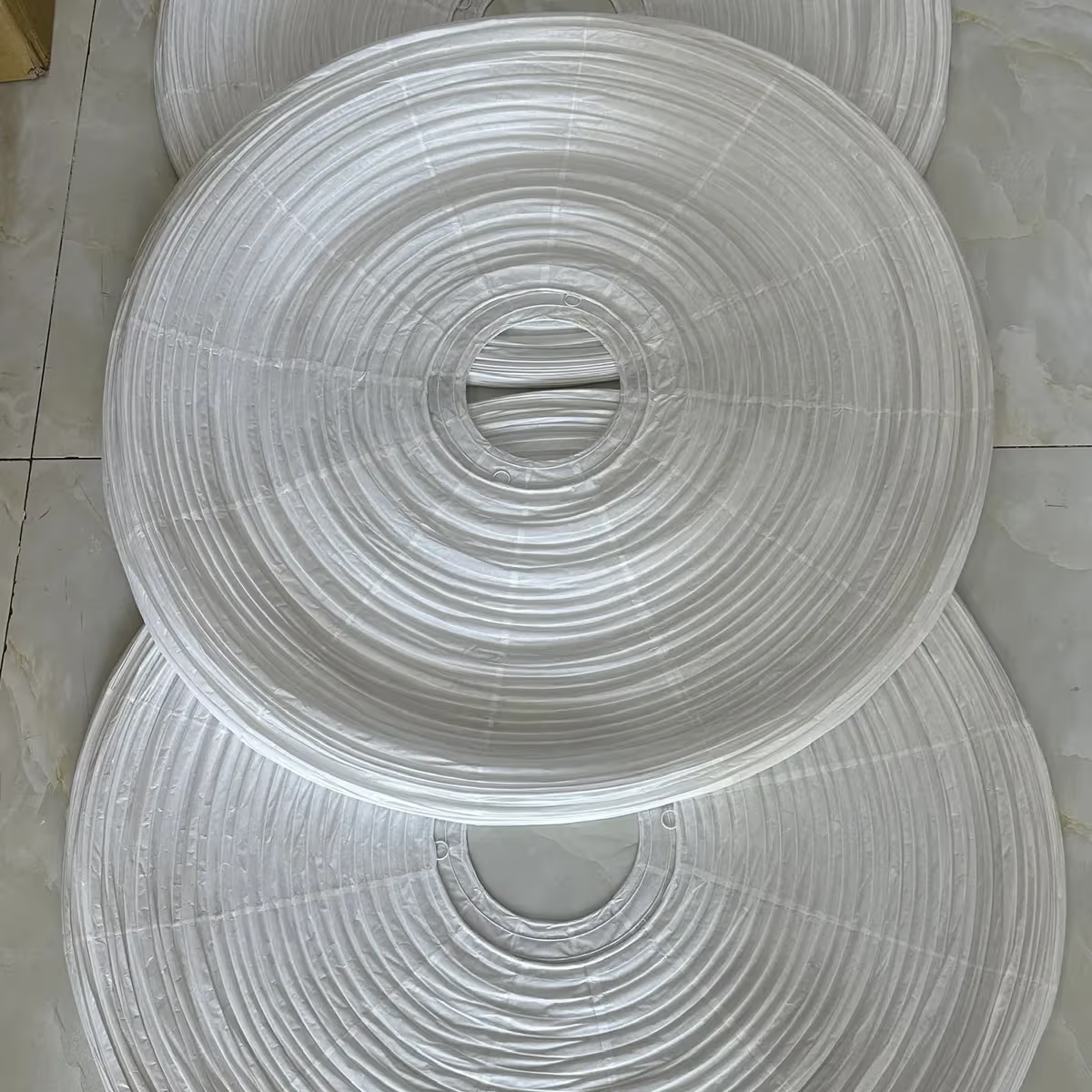
Rice paper — washi — lamps are a classic part of Japanese lighting and are outside what KAHA builds; everything on this page is fabric over a metal frame. That construction difference does affect day-to-day use, in ways worth being straightforward about: fabric over an iron frame is more resistant to tearing and moisture than paper, and when the fabric shows wear it can be replaced on the same frame — see our lamp shade repair & recover page. Paper generally isn’t re-covered the same way.
We won’t make specific fire-safety or certification claims about either material here — check the manufacturer’s own specification for any lamp, paper or fabric, against your local wiring and bulb wattage. The comparison below is about durability and repairability, not a safety verdict.
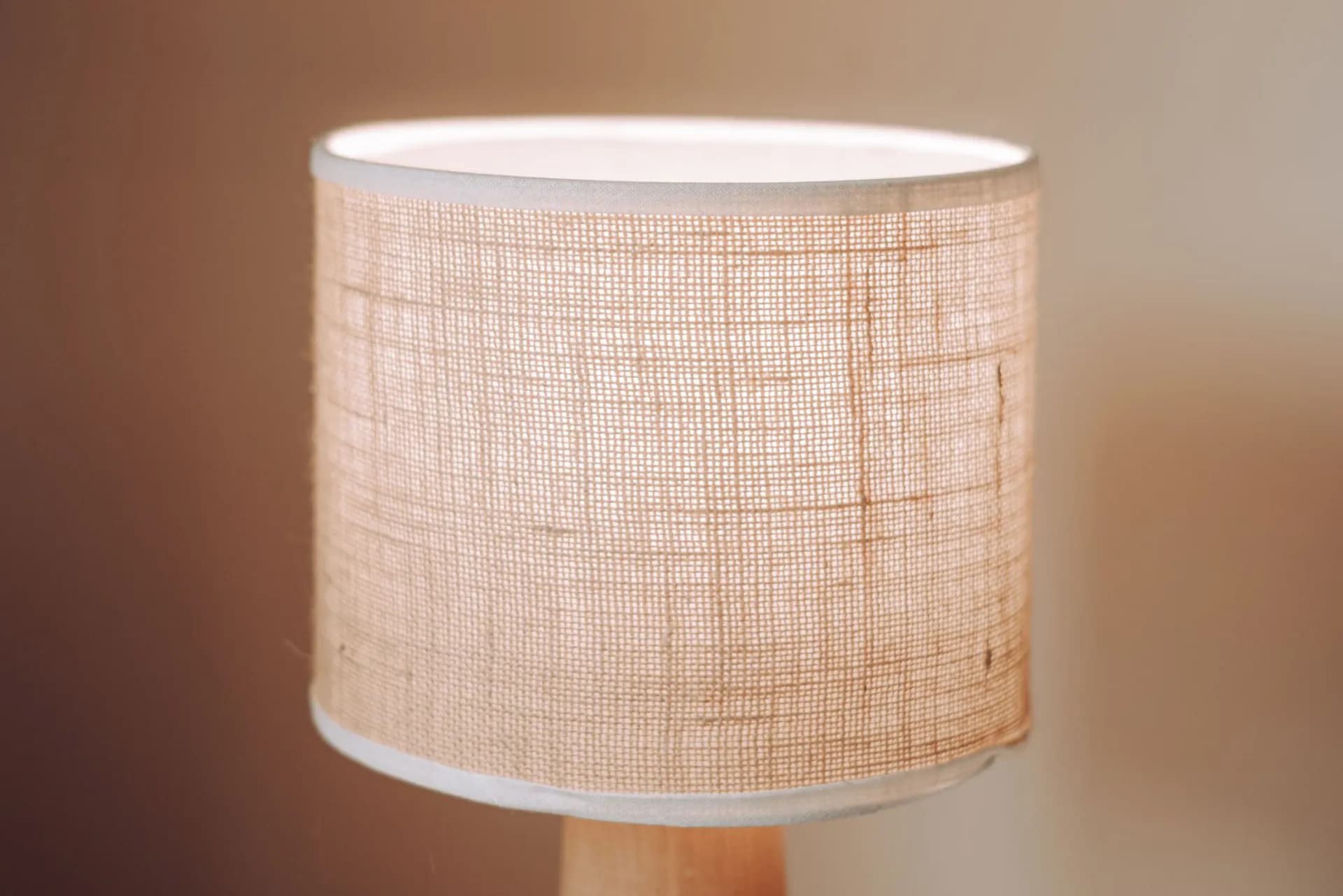
More resistant to tearing and moisture; the fabric can be re-covered on the same frame when it wears.
Traditional and lightweight; more delicate to moisture and impact, generally not designed to be re-covered.
Vietnam Context
This aesthetic travels well into Vietnamese interiors — warm light and rough natural texture suit smaller, softer spaces without needing a full renovation.
A single drum or cone shade over a reading corner works well in smaller Vietnamese apartments — one deliberate piece rather than a bright ceiling fixture.
A charcoal or ochre linen shade at low height suits the quieter, slower pace homestays are often designed around.
A goatskin or raw-tussah cluster at counter height gives a cafe or small restaurant a warmer, more textured feel than downlights alone.


Common Wabi-Sabi Lighting Mistakes
Most misses come from fighting one of the five principles above without realising it.
A cool 4000K+ bulb undoes the whole effect — wabi-sabi needs warm 2200-2700K light, not daylight-toned.
Lining up three identical shades at identical spacing reads as Japandi, not wabi-sabi — deliberate unevenness is the point.
A shiny synthetic finish, or one with a printed pattern, breaks the rough-texture principle immediately.
Cool Scandinavian grey belongs to Japandi — wabi-sabi wants warm plaster, clay or timber tones around it.
Beyond the Lamp
General styling guidance, not a KAHA product claim — the same asymmetry and rough-texture principles extend to what sits around the lamp.
Raw or lightly oiled wood grain echoes the same “uneven, natural” principle as the fabric.
A honed or textured surface, not polished — matte finishes read as calmer under warm low light.
Visible throwing marks and glaze variation match the asymmetry principle in tableware or planters nearby.
A wall finish with visible texture and colour variation, rather than a flat painted surface, holds shadow better.
General Care Guidance
General recommendations, not a KAHA warranty term — a wabi-sabi shade is meant to age visibly, so care here is about pace, not prevention.
A soft dry brush keeps the rough weave from trapping dust without flattening its texture.
A well-ventilated spot avoids the musty smell that can build up in closed, damp rooms — general guidance, not a warranty term.
Wabi-sabi fabrics are meant to age visibly — slight colour drift over time is part of the look, not a fault.
When a shade eventually wears out, the frame can usually be re-covered in fresh fabric instead of building an entirely new lamp.
Recovering an Existing Lamp Into This Look
A shade that no longer fits its room doesn’t need a new lamp, just a new fabric. See our lamp shade repair & recover page for how KAHA rebuilds an existing frame in a fabric like rough linen or raw tussah instead of the original cloth.
Wabi-Sabi Lighting Questions
Five things together: rough natural texture, an asymmetric or imperfect form, a fabric finish that looks aged rather than new, an earth-tone colour palette, and warm, low light in the 2200–2700K range. A single element isn’t enough on its own — it’s the combination that reads as wabi-sabi.
No. Japandi blends Japanese minimalism with Scandinavian design, and includes cooler greys and whites in its palette. Wabi-sabi, on its own, stays in warm earth tones throughout — brown, olive, ochre, charcoal, terracotta — with no Scandinavian element.
Brushed linen, raw undyed tussah and vintage-finish goatskin are the three most common choices — each has visible, uneven grain rather than a smooth, glossy surface. Pre-washed linen is often preferred because it already has an aged texture.
Warm white in the 2200–2700K range, at a low lumen output. A tea room or meditation space sits at the dimmer end (2200K, with a dimmer switch); a resort suite or cafe cluster usually runs slightly brighter at 2700K.
Yes — wabi-sabi pieces go through the same made-to-measure process as any other custom order. See our custom lampshades page for how that works, or send your size and preferred fabric directly on WhatsApp.
Construction, mainly: fabric sits over a metal frame, washi is paper stretched over a lighter frame. Fabric tends to hold up better against tearing and moisture, and a fabric shade can be re-covered on the same frame when it wears out. We don’t make fire-safety or certification claims either way — check the specification of any lamp against your local wiring.
Yes. Swatches and a sample lamp are shipped to you first, and nothing goes into production until you approve what arrives.
Start a Wabi-Sabi Order
Building this style onto an existing lamp base instead of from scratch? See our lamp shade repair & recover page. For a fully custom build from a drawing or size, our custom lampshades page covers the process. Or head back to the KAHA overview for the full range.
What to send us for a fast quote