

Crushed fabric lotus decorative lamp for interiors
from $195Get quote
A word on terms first, so nothing is oversold: this is not an on-the-spot patch job while you wait. It is a workshop service — “re-covering” or “recovering” a lamp shade, sometimes called re-shading. KAHA removes what is left of the old fabric, checks the frame, and builds a fresh shade onto it in a fabric of your choice. The result looks and performs like a new lampshade, at a fraction of the cost of one, because the expensive part — the welded and powder-coated frame — is already yours.
It is worth saying plainly what this page does and doesn’t cover, because the search terms people use for it vary a lot. If a shade is torn, faded, stained, or simply feels wrong for a room that has changed direction, and the metal underneath is still solid, this is the right service. If the wiring, socket or switch is the problem rather than the fabric, that is electrical work outside what a fabric workshop handles — an electrician is the right call there, and KAHA can still rebuild the shade itself once the electrical side is sorted. The rest of this page walks through exactly what KAHA needs from you, what a re-cover typically costs, and where it won’t help.
Terminology
Searches for this service use different words for the same job: “lamp shade repair,” “lampshade recovering” (the standard English-English term for rebuilding a shade’s fabric), “re-covering,” “re-shading,” and simply asking to “replace lampshade fabric” or “restore” an old shade. KAHA treats all of these as the same request: strip the old fabric, keep the sound frame, build a new fabric shade onto it by hand.
Looking for a lampshade recovering service near Ho Chi Minh City specifically, rather than shipping in from elsewhere? See the workshop address and collection option further down this page.
One distinction worth being clear about: this is not a lamp-repair service in the electrical sense — KAHA doesn’t rewire sockets, replace switches or fix faulty bulbs. The work here is entirely about the fabric shade and the frame it sits on. If a lamp needs electrical attention as well as a new shade, the two jobs are usually handled separately: an electrician for the wiring, KAHA for the shade.
From KAHA's Workshop
These pieces show the fabric, stitching and frame work involved in every KAHA shade — the same hand process is used whether a job starts from a bare frame or your existing base.


Indicative unit price, ex-works Ho Chi Minh City. Excludes freight, insurance and duties. Volume pricing confirmed on quotation.
Before You Send a Photo
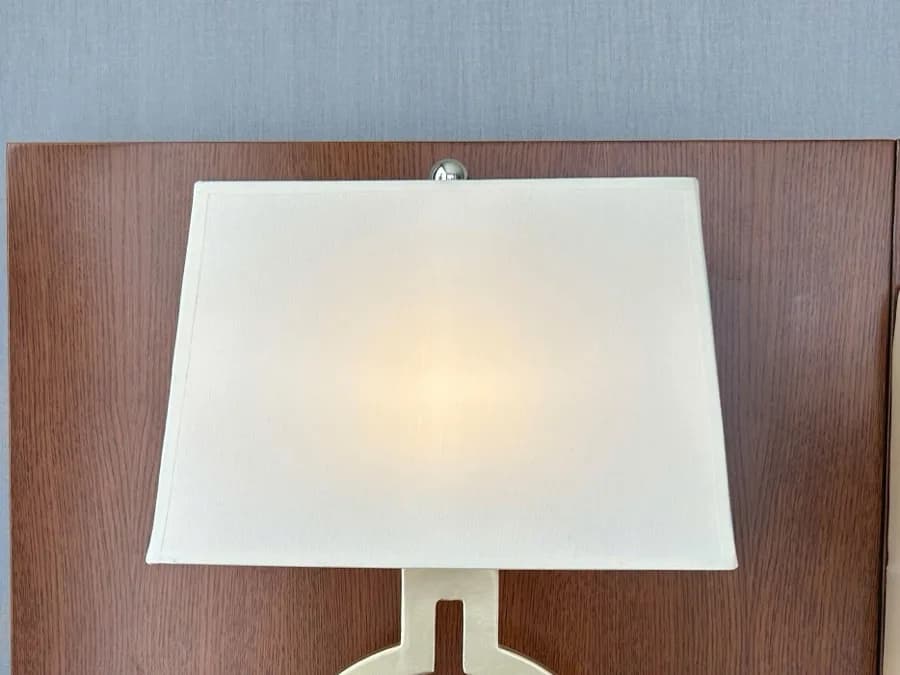
Four angles cover almost everything needed for an accurate first quote — no special equipment, a phone camera is enough.
A straight-on shot showing the overall shape and fabric condition.
Shows the slant/profile — helps confirm the shape (cone, drum, bell, etc.).
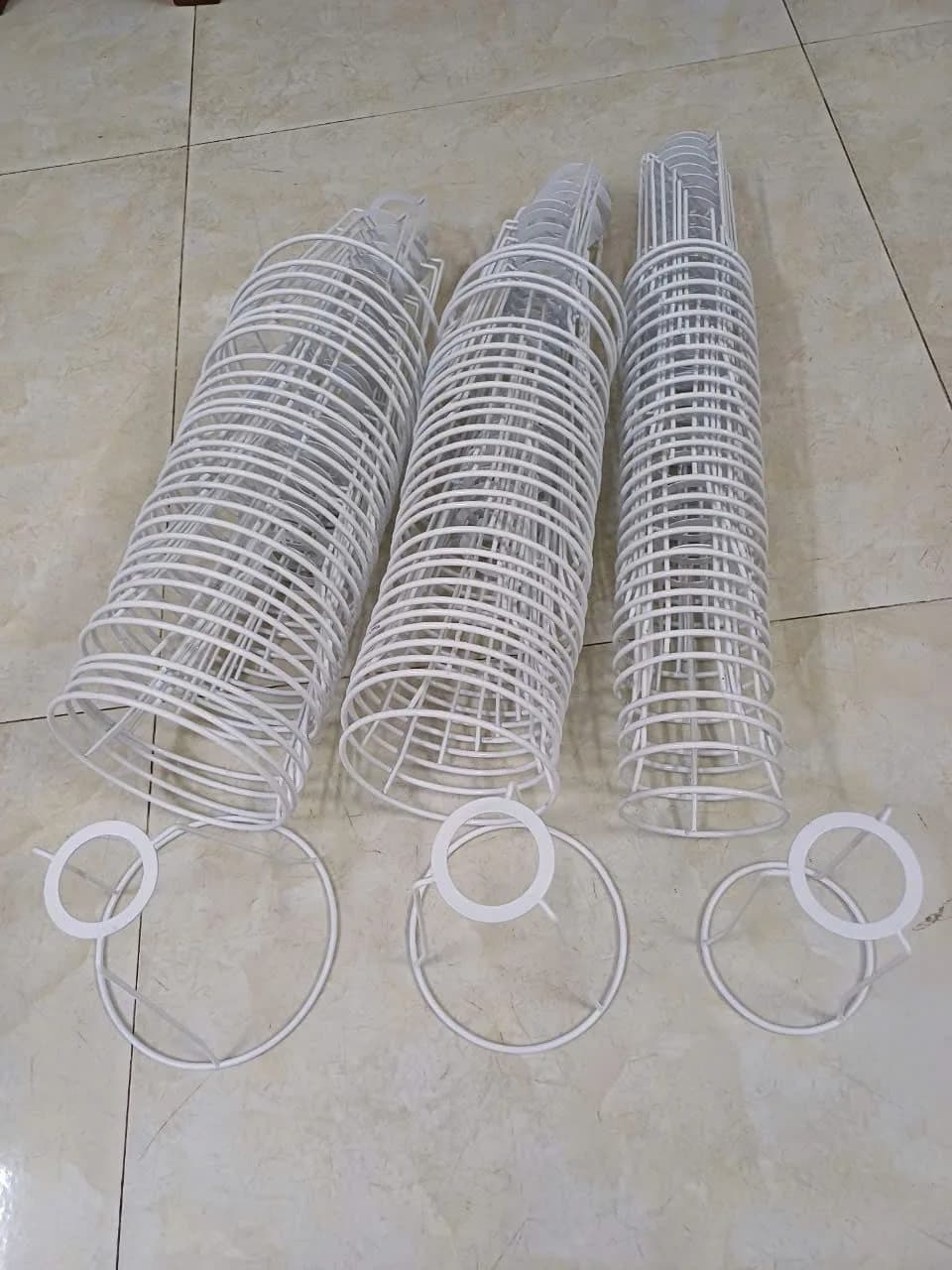
Looking up from underneath shows the fitter type and the frame’s condition.
A tight shot of any tear, stain or rust spot — speeds up an accurate quote.
Lampshade Measurement Guide
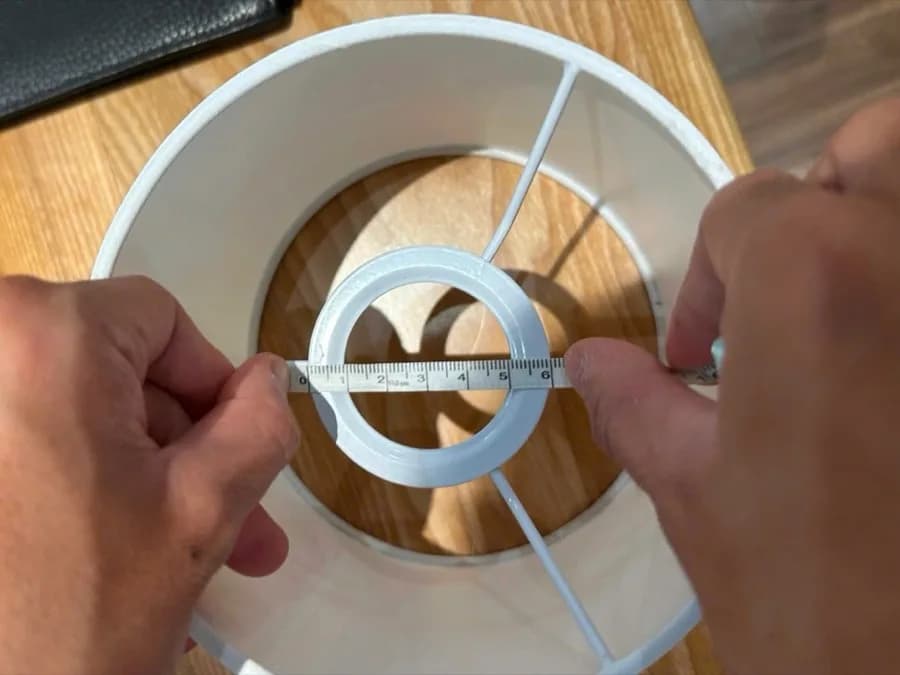
A quote is faster and more accurate with four rough numbers alongside your photos: the diameter at the top, the diameter at the bottom, the slant height (measured along the fabric face, not straight down), and the fitter type — how the shade attaches to the harp or the socket. A tape measure and a phone camera are enough; nothing needs to be exact to the millimetre for a first quote.
Send these four numbers together with your frame photos on WhatsApp and they go straight into the same quote as the fabric and quantity.
Common Fitter Types
As a rule of thumb, most fabric lamp shades use one of three fitter types — knowing which one saves a back-and-forth once your frame arrives.
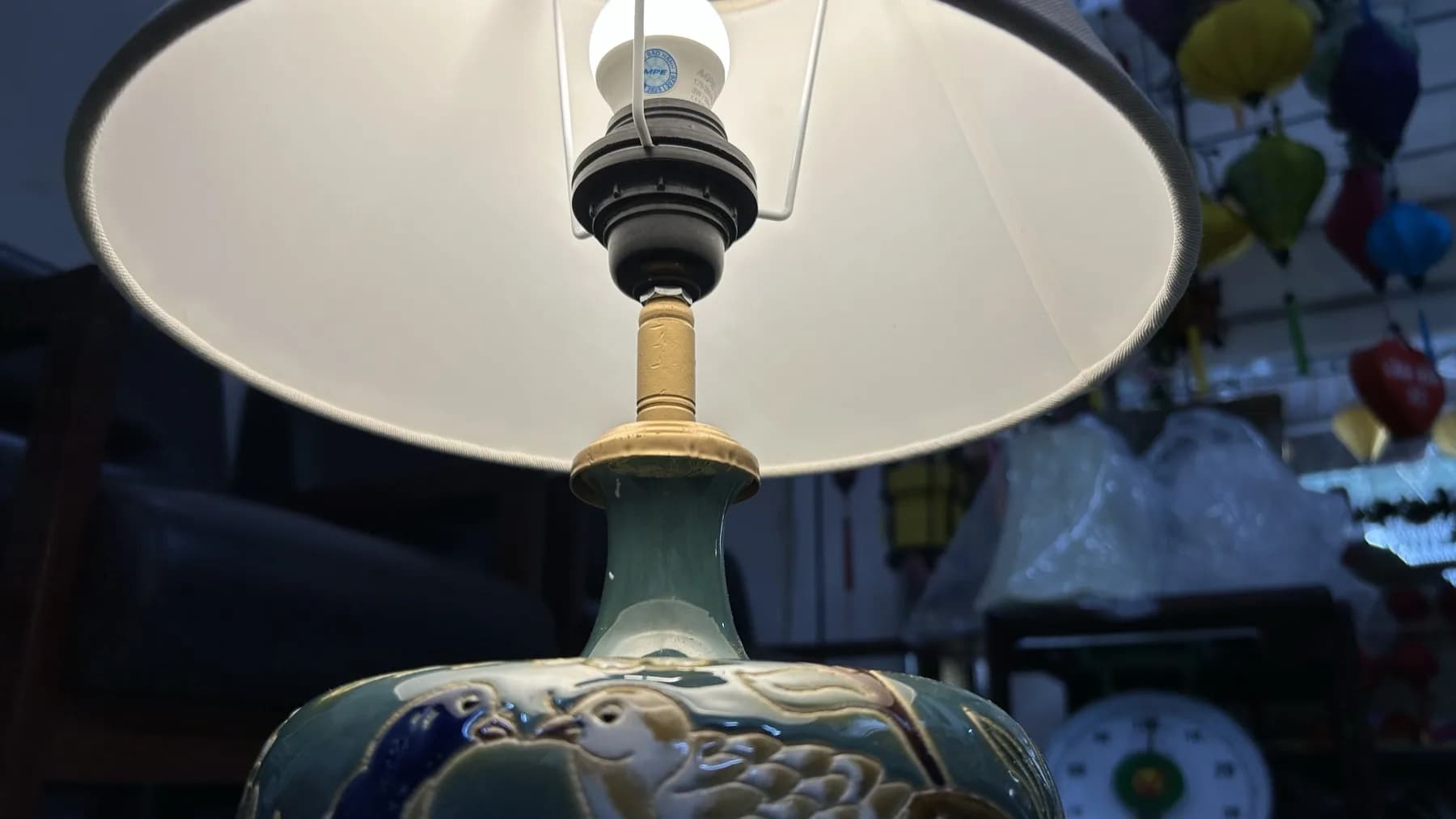
A wire loop sits over the bulb; the shade’s finial screws onto the top of the harp. Common on table and floor lamps.
The shade threads directly onto the socket, no harp needed. Common on smaller bedside lamps.
The shade clips onto the bulb itself — no harp or threaded fitting at all.
How Lampshade Recovering Works
No walk-in counter, no same-day fix — the frame travels to the workshop, gets re-covered by hand, and travels back. Most jobs are done in five to seven working days once the frame arrives.
Front, side and base of the frame, via WhatsApp or Zalo, plus quantity and any fabric preference.
Based on diameter, fabric and quantity. Exact pricing is confirmed once the frame is in hand.
Ship it to the workshop, or we collect directly for larger Ho Chi Minh City orders (30+ pieces).
Old fabric stripped, frame checked, new fabric hand-wrapped, QC’d, then shipped back to you.
Typical turnaround: five to seven working days once the frame arrives.
What Changes, What Stays
A shade that has faded, torn along a seam, or picked up water stains usually still has a perfectly good frame underneath. KAHA strips the old fabric, checks the metal, touches up the finish where the surface has dulled, and wraps it in new cloth — cut, stitched and QC’d exactly as it would be for a brand-new order.
What does not carry over is the old fabric itself — there is no repairing torn cloth in place. The frame is the part worth keeping; the fabric is always rebuilt fresh.

Common Damage We See
Five conditions cover most shades that come in for a re-cover — four are straightforward fabric problems, one is a frame condition worth flagging early.
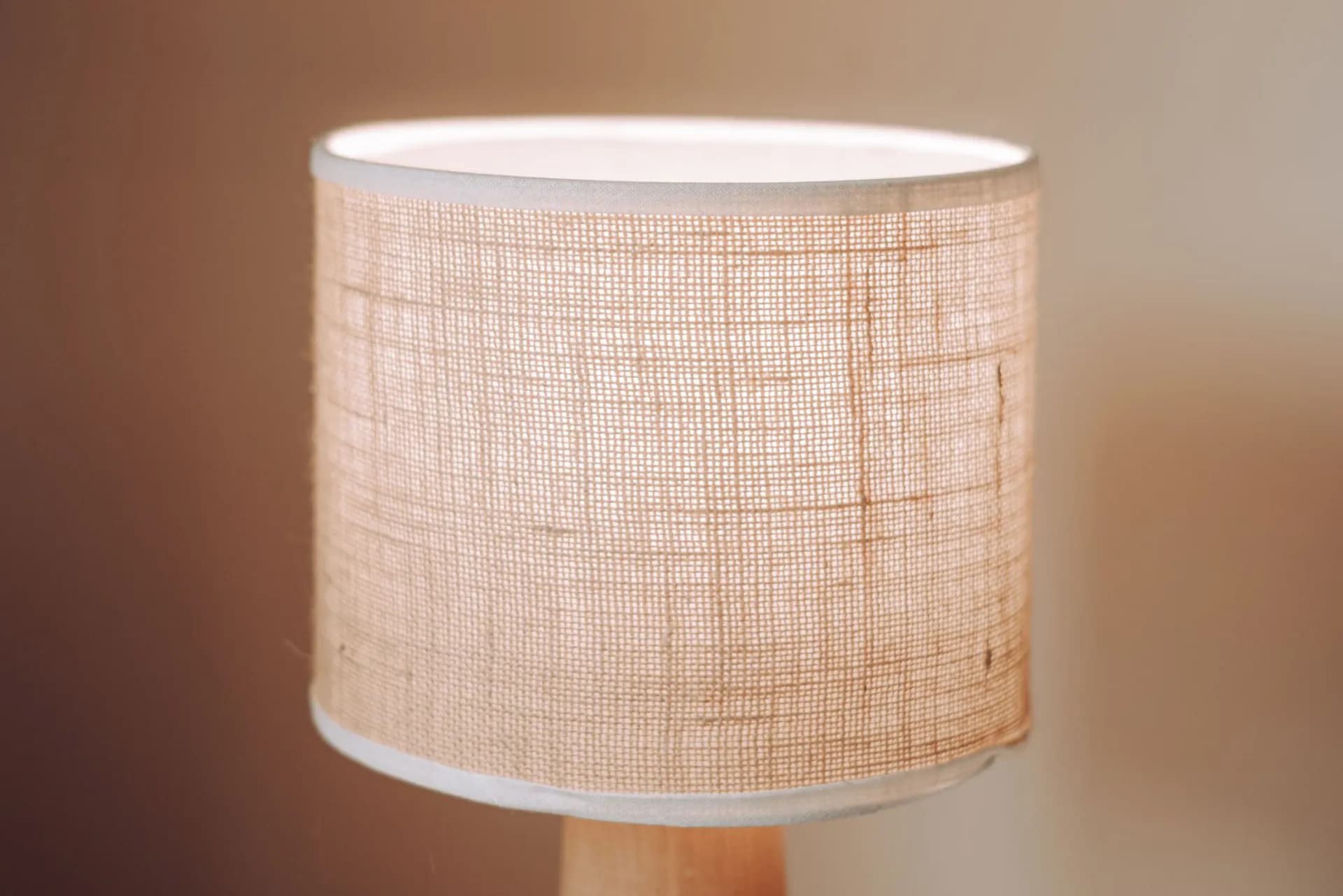
Sun exposure fades colour unevenly over months or years — the fix is a fresh cloth, not a dye.
Stitching gives way at a seam or fold line before the fabric itself fails.
Light rust on the outer coating — treated and re-coated before the new fabric goes on.
Rust that has eaten into the metal itself — this is one of the conditions a re-cover can’t fix.
Discoloured rings or blotches from splashes or humidity — fabric-only, doesn’t affect the frame underneath.
Frames KAHA Re-Covers
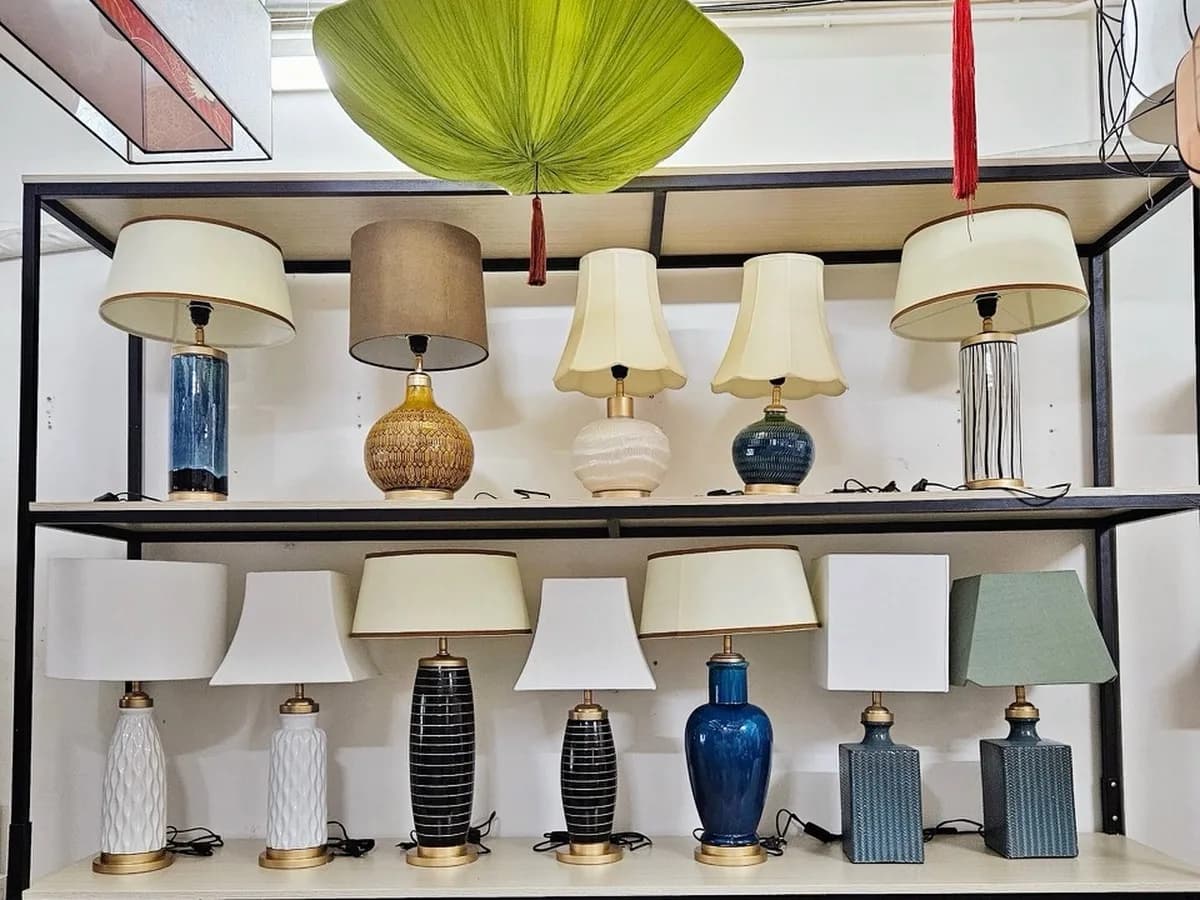
Cone, drum, bell, oval, square and cylinder shades are the most common re-covers — the condition is simply that the frame still holds its original shape and can be stripped and re-wrapped. Fabric choice runs across the same range used for new orders, nine cloths in total, each suited to a different look and light.
Frames must be metal — iron, steel or brass. Plastic and paper frames are not rigid enough to hold fabric taut through a re-cover and are better replaced outright.
Fabric Options
The same nine cloths used for a brand-new order are available for a re-cover — pick by the space the shade sits in, not just the colour.
Resort & nature-style restaurants
Light rough surface, filters light softly.
Boutique hotels & cafes
Denser weave, creases less than plain linen.
4–5 star hotels & spas
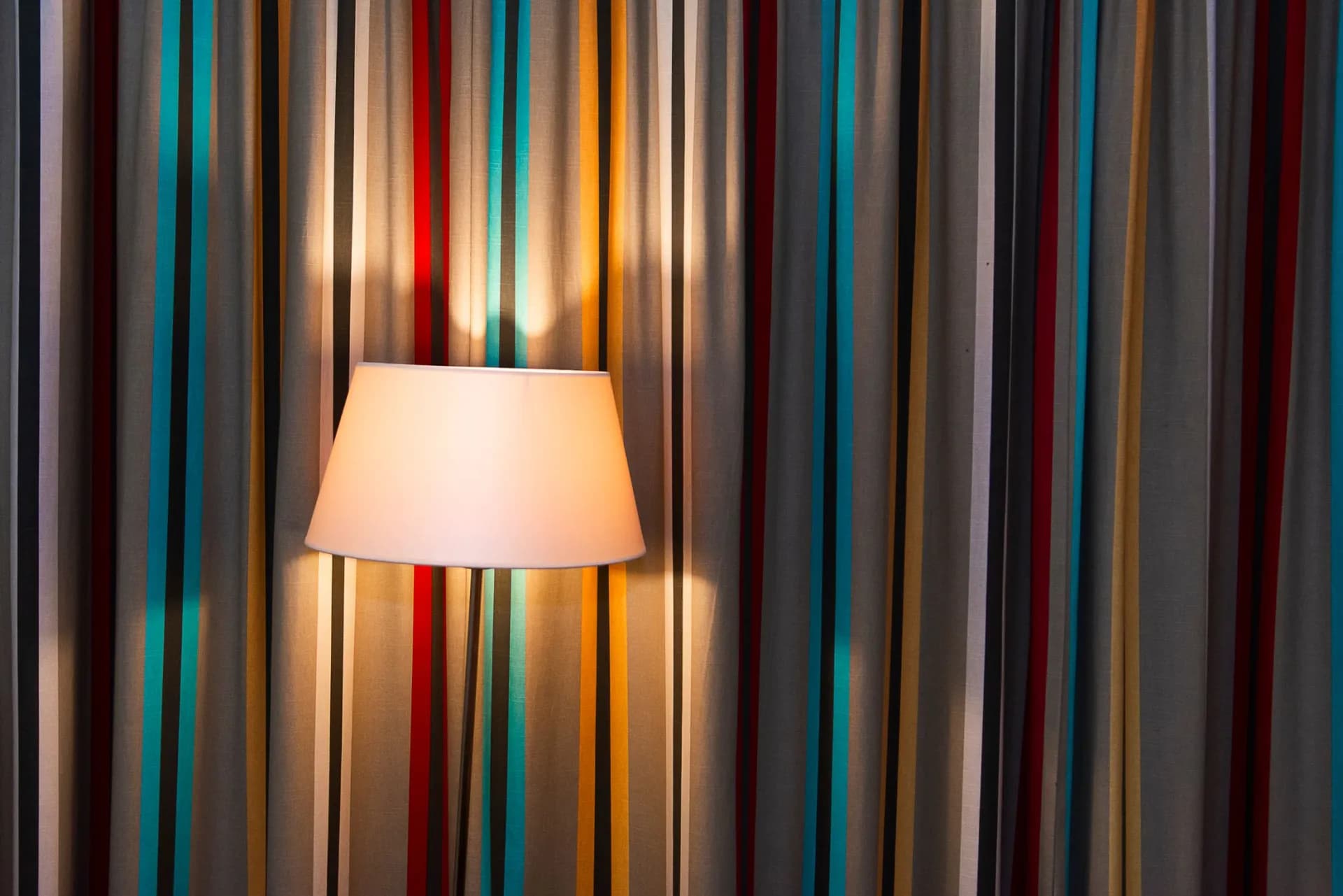
Smooth surface, warm golden glow, luxurious feel.
5-star hotels, fine dining, VIP rooms
Stiffer than plain silk, holds its shape well.
Offices & 3-star hotels
Flat surface, easy to keep clean, good value.
Vietnamese restaurants & rustic spaces
Natural rough texture, visibly handcrafted.
Industrial & vintage cafes
Thick weave, lower light transmission, strong look.
Classical & Indochine interiors
Pleated by hand — needs a skilled seamstress.
Luxury spaces & premium showrooms
Distinctive grain, water-resistant, very durable.
Shape Options
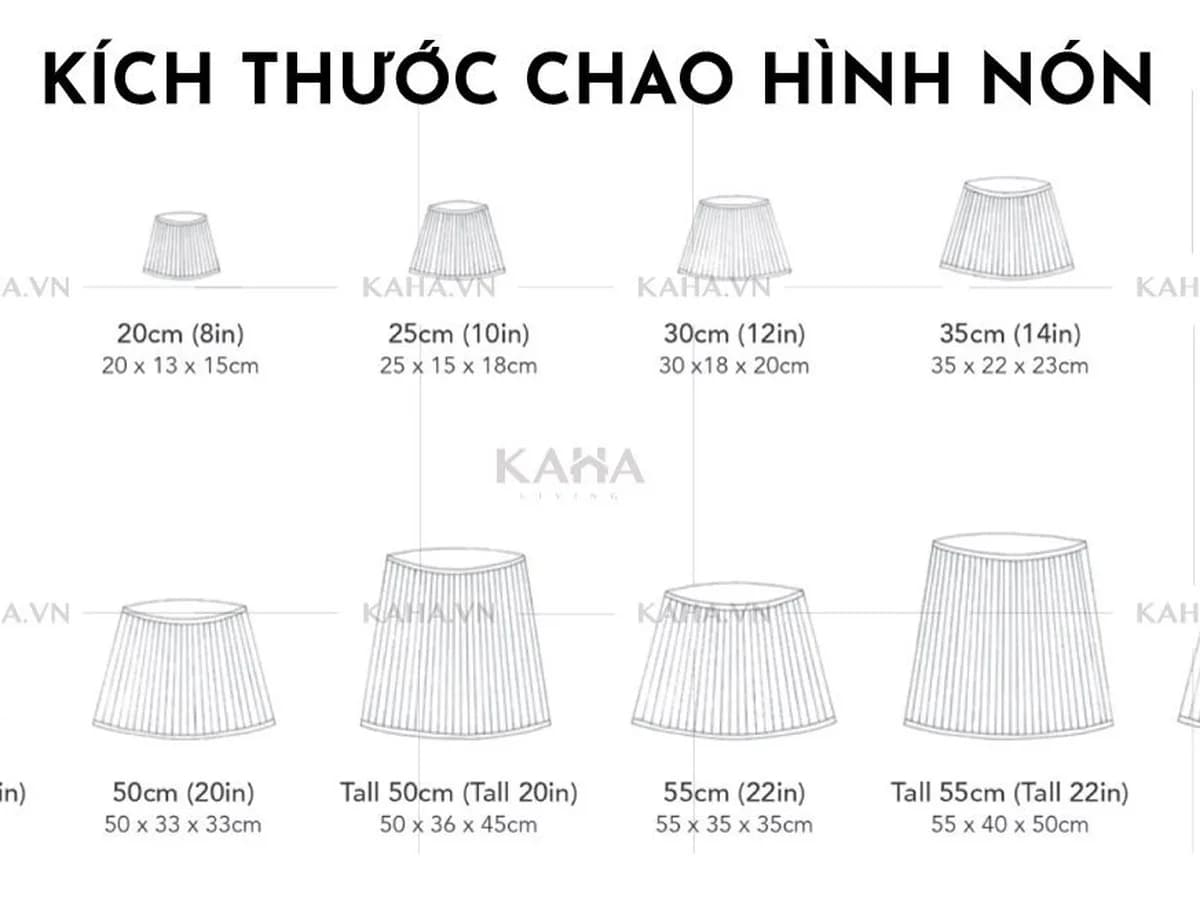
A re-cover keeps the original shape — these six cover almost every frame that comes through the workshop.
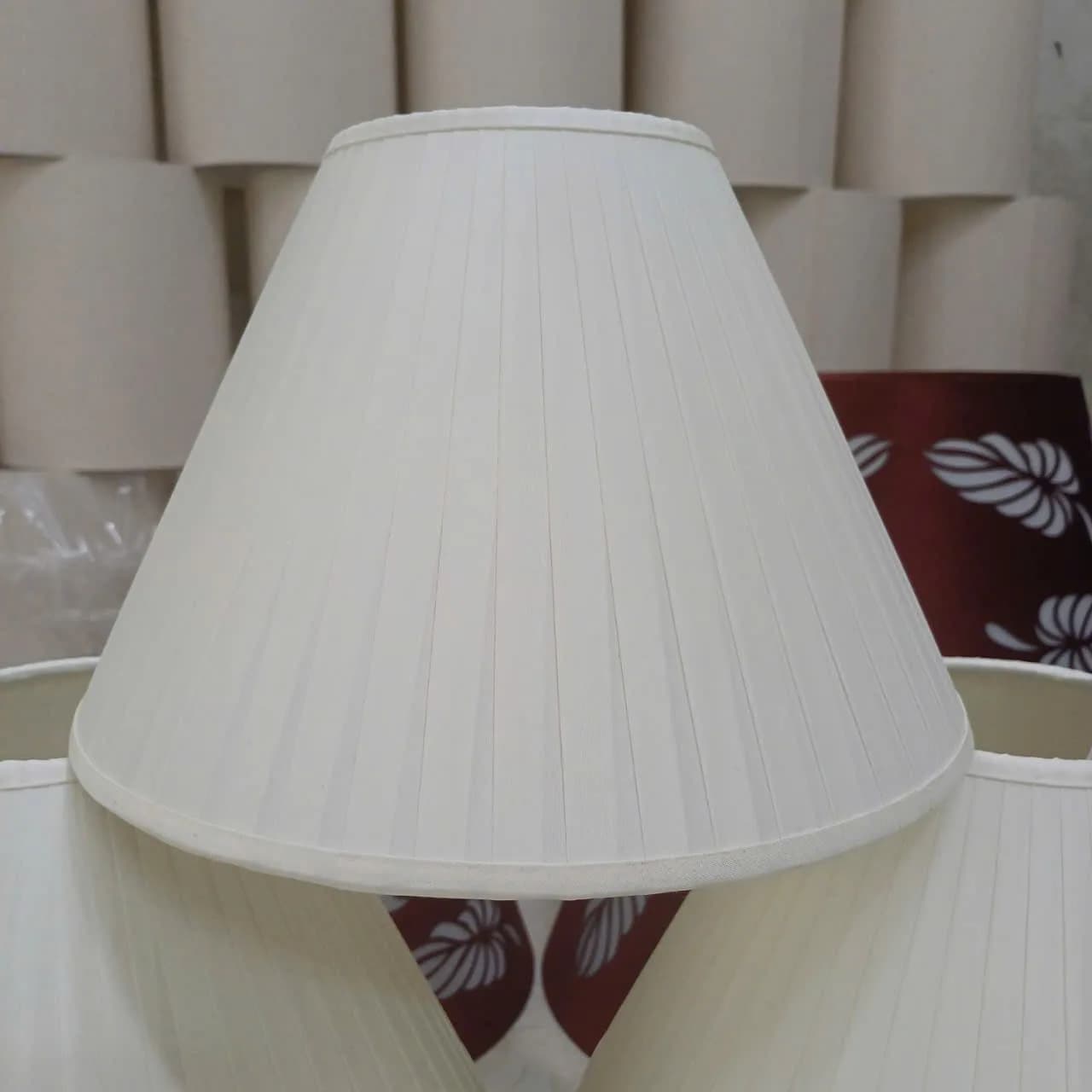
The most common shape for bedside table lamps.
Modern, even cylinder — living rooms, lobby halls.
Classic Asian silhouette — boutique hotel, spa.
Softer outline — vintage rooms, Indochine interiors.
Straight edges — minimalist rooms, design offices.
Straight-sided tube — Japanese restaurants, modern spaces.
When KAHA Turns a Frame Away
Most frames that arrive are straightforward. These four cover the checks KAHA runs before starting any job.
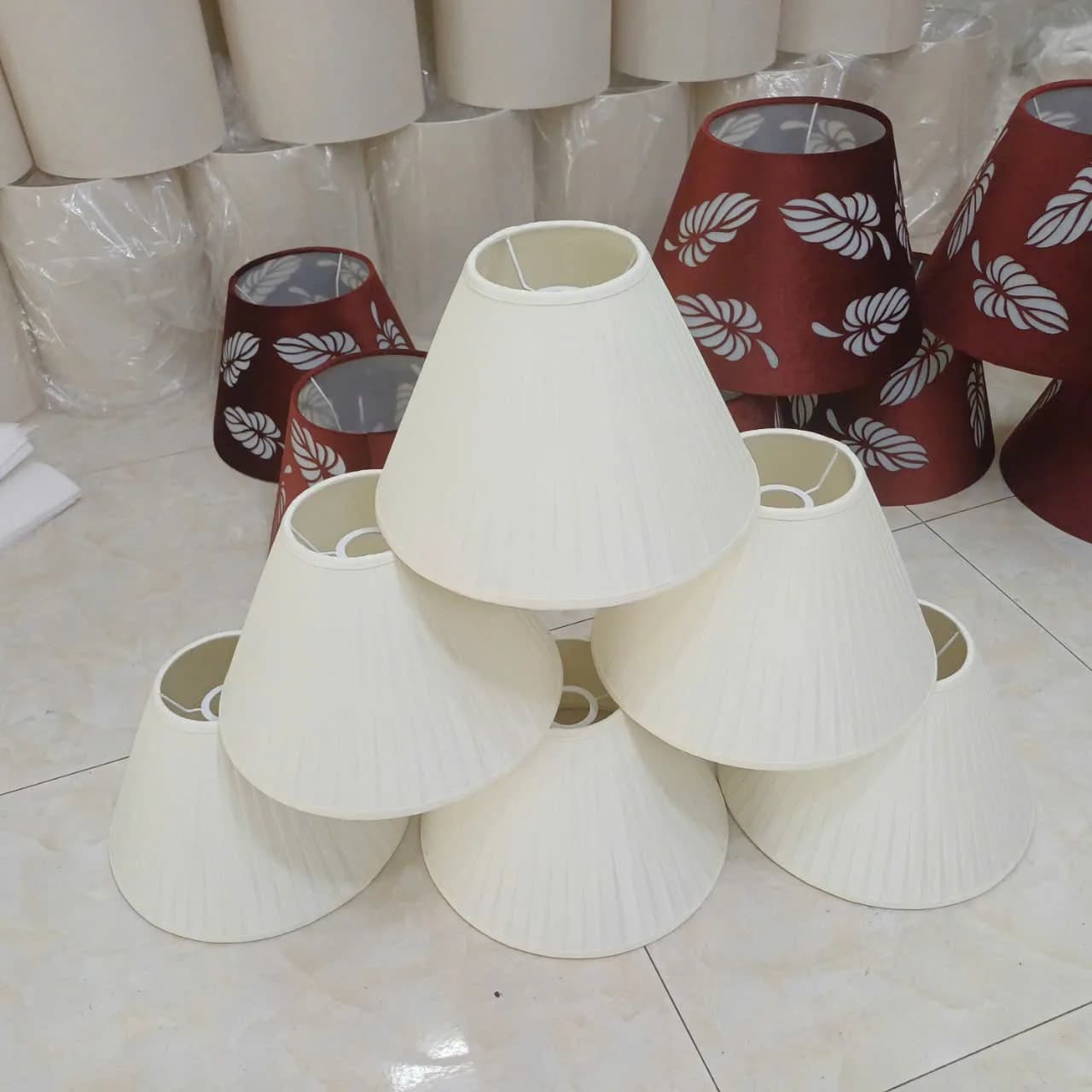
Iron, steel or brass, holding its original shape — the standard case, and the one a re-cover is built for.
A snapped rib or a shape warped out of round won’t hold new fabric evenly, however carefully it’s wrapped.
Surface rust is treated and re-coated; rust that has eaten into the core will keep bleeding through new fabric within months.
Not rigid enough to hold fabric taut through a re-cover — a new build is the better route.
About Lampshade Frames
To be clear for anyone searching for lampshade frames for sale or a lampshade frames supplier: KAHA is not that. A frame only exists here as part of a finished shade — either welded new to your drawing or size as a custom order, or re-used from your existing lamp during a re-cover.
If what you actually need is a bare frame to fit your own fabric, this isn’t the right service. If you need a finished shade — new or re-covered onto a frame you already own — that’s exactly what KAHA builds.
Why It Costs Less
Welding, hanging hardware and powder-coating make up most of the cost of a lampshade. Skip rebuilding that and a re-cover on a single shade typically runs 40–60% less than ordering the same shade new, depending on fabric and size.
Hotels refreshing shades room by room or floor by floor see a smaller but still real saving — roughly 30–40% against a full replacement — because a renovation batch is scheduled and quoted as one job rather than piece by piece. Either way, a re-covered shade carries the same 12-month warranty as a new one.
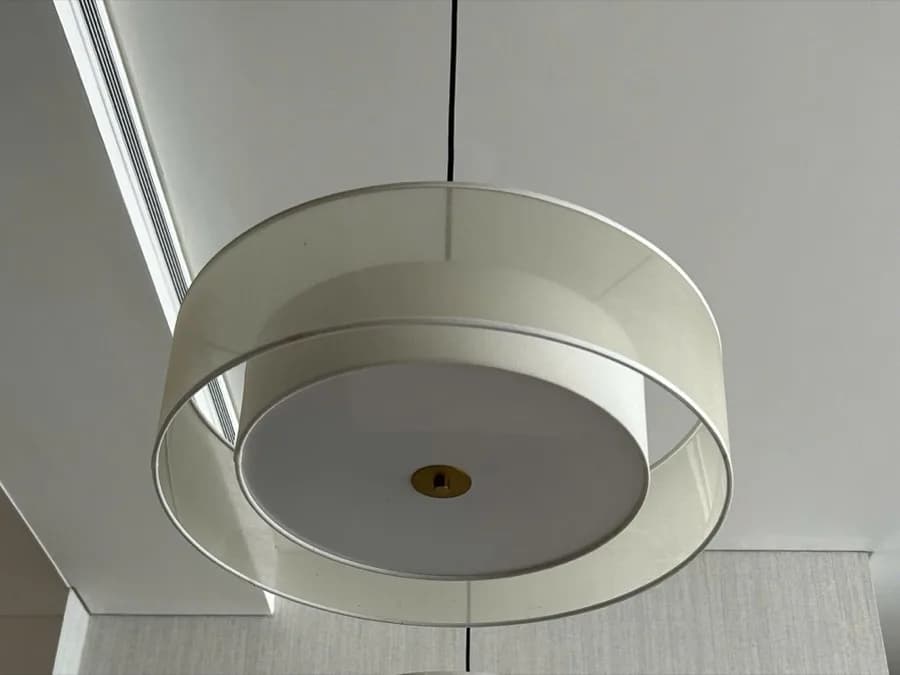
Real Situations We See
The reason for a re-cover varies — the process underneath stays the same in each case.
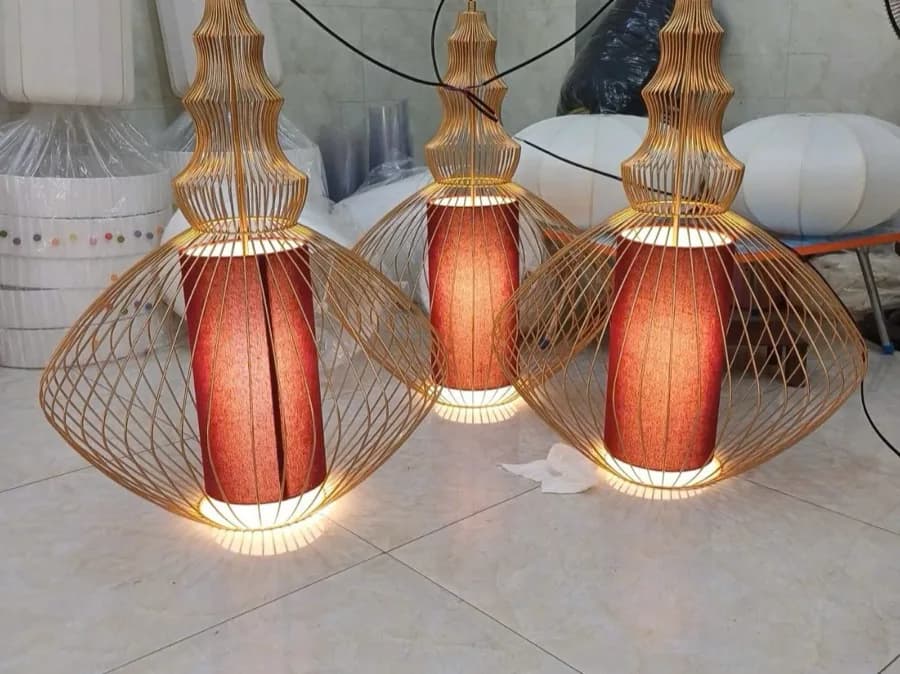
Fittings and wiring standards vary by country. KAHA works on the fabric shade itself — measuring and rebuilding around whatever base or frame arrives, regardless of where it was originally bought. Rewiring or plug conversion is outside what this service covers; an electrician handles that side.
Shades wear unevenly across a property — lobby pieces catch more light and dust than guest-room bedside lamps. Sending photos by room or by floor lets KAHA quote by category, so a renovation can run in phases without closing a whole property section at once.
Older lamps are often built on solid brass or iron bases meant to last generations — exactly the kind of frame a re-cover is built for. The base and its history stay untouched; only the fabric shade is rebuilt.
General Care Guidance
Vietnam’s heat and humidity are harder on fabric than a drier climate. These are general recommendations, not a KAHA warranty term — simple habits that make any fabric shade last longer between re-covers.
Fabric shades are built for indoor or covered use — direct rain or splashing shortens fabric life regardless of the cloth.
If a shade is off the lamp for a while, a dry, ventilated spot avoids the musty smell humid storage can cause.
A soft dry brush or a barely damp cloth is usually enough — harsh detergent can strip dye from natural fabrics.
Fading is gradual and even under normal room light; a shade sitting in a sunbeam for hours a day will fade faster.
Sending Your Frame
If you’re in Ho Chi Minh City, our workshop can collect frames directly for larger renovation orders. Outside the city, or for a single frame, you ship it to our address below and we ship the finished shade back once it’s done, packed the same way as any outbound order.
Either way, the process starts the same: a photo of the frame on WhatsApp or Zalo — front, side and base — with the quantity and any fabric preference. A quote usually follows within 30 minutes.
Re-Covering With a New Look
Some renovations use a re-cover as a chance to shift direction — a rough linen finish and warm low light instead of a glossy original. See our Japanese wabi-sabi lamps page for that palette.
Before You Send a Photo
Usually, yes. The most expensive part of a shade is the welded, powder-coated frame. If the frame is still sound, KAHA only rebuilds the fabric — typically 40–60% less than the cost of the same shade built new, depending on fabric and size.
Cone, drum, bell, oval, square and cylinder frames, in metal only (iron, steel or brass). Fabric choice covers the same range used for new shades — brushed and salt-and-pepper linen, Hoi An silk, two-tone silk, taffeta, raw tussah, canvas, hand-pleated cloth and goatskin.
There is no fixed price list — cost depends on diameter, fabric and quantity, and KAHA quotes within 30 minutes of seeing your photos. As a reference point, finished shades in KAHA’s made-to-measure collection range from around $25 to $735 (ex-works), and a re-cover on your own frame typically runs 40–60% below the cost of the same shade built new.
No. KAHA doesn’t sell frames on their own, as raw stock or by the piece. A frame only leaves the workshop as part of a finished shade — welded new to a drawing or size for a custom order, or re-used from your existing lamp during a re-cover.
Four rough numbers help: the diameter at the top, the diameter at the bottom, the slant height measured along the fabric face, and the fitter type — how the shade attaches to the harp or socket. A tape measure is enough; nothing needs to be exact to the millimetre for a first quote.
Most jobs take five to seven working days once the frame reaches the workshop: about a day to strip the old fabric and inspect the frame, two to three days to build the new shade by hand, and the rest for QC, packing and shipping. Larger renovation batches are scheduled ahead of time.
Yes. Ship the frame to our workshop at 262/1/93 Phan Anh, Phú Thạnh Ward, Ho Chi Minh City, and we ship the finished shade back to you. For larger orders inside the city we can collect directly.
Three cases we flag before starting: a frame that is broken or badly out of shape, rust that has eaten into the core metal rather than just the surface, and plastic or paper frames, which aren’t rigid enough to hold fabric taut. In those cases a new build is the better route.
Usually, yes, for the shade itself. KAHA measures and rebuilds the fabric shade around whatever base or frame arrives, regardless of where it was bought. Rewiring or plug conversion is outside this service — an electrician handles that side if it’s needed.
Yes — send photos and the total count by room or by floor, and we quote by category so budgets can be approved quickly. Work is usually scheduled floor by floor so the whole property doesn’t need to close a section at once, with a typical saving of 30–40% against buying every shade new.
Start a Re-Cover
Building a shade from a bare frame or a fresh drawing instead of recovering an existing one? Our custom lampshades page covers that process. Ordering in quantity for a shop or a property? See wholesale lampshades. Or head back to the KAHA overview for the full range.
What to send us for a fast quote