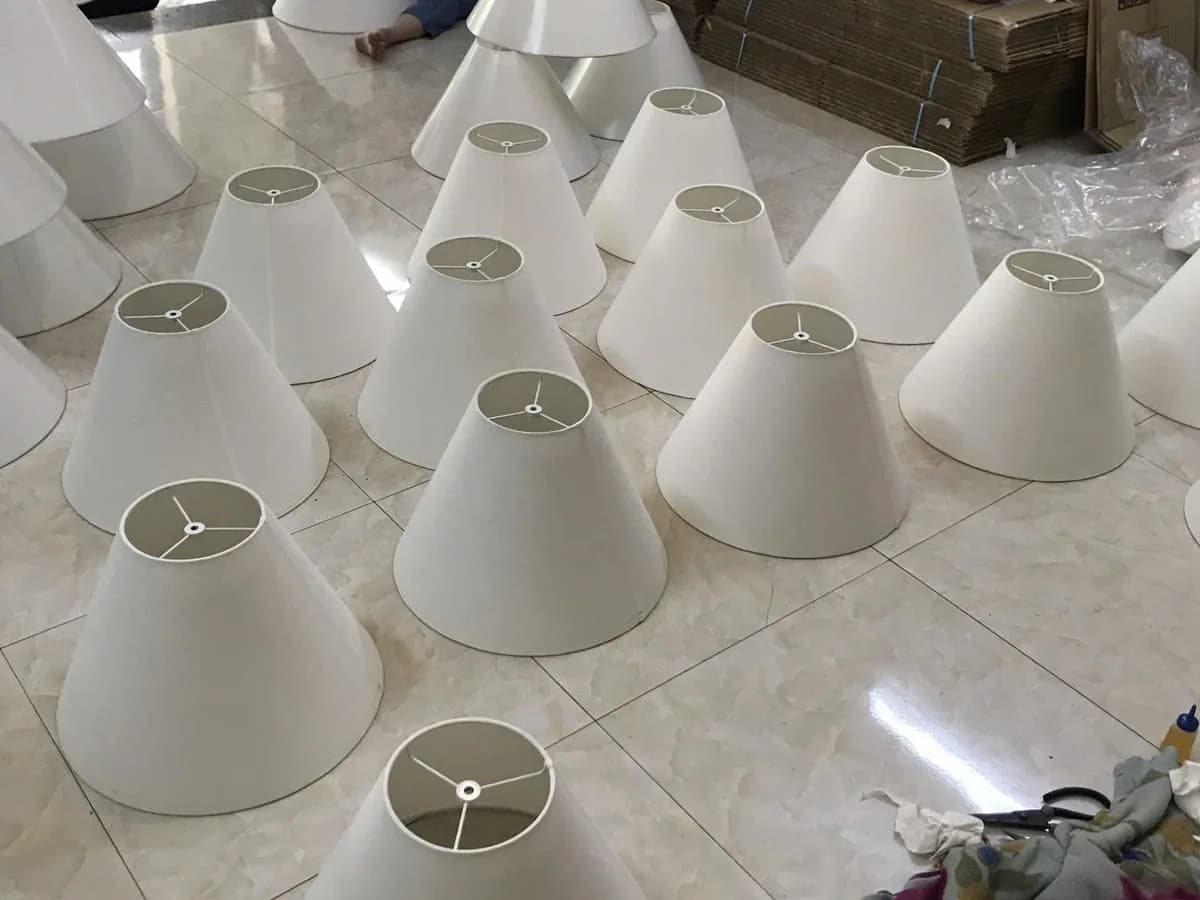
Set of 5 — Crushed fabric decorative lamp for cafés
from $400Get quote
A pendant is usually the first fixture a room needs and the last thing anyone changes once it is hung, so getting the fabric, shape and drop right the first time matters. KAHA has hand-built fabric pendants in Saigon since 2018 — for single-room orders and for hospitality projects needing dozens hung at matching heights. This page covers how a fabric pendant is built, how to size and hang one, and what to expect from ordering through to delivery and care.
From Recent Pendant Orders
Cafés, coffee shops, restaurants, grill houses and hotel rooms KAHA has hung pendants in — a sample of the fabrics, shapes and sizes a pendant order can look like.


Indicative unit price, ex-works Ho Chi Minh City. Excludes freight, insurance and duties. Volume pricing confirmed on quotation.
Why Fabric, Not Metal or Glass
A bare metal or open-glass pendant sends light out in a hard, direct cone — fine over a workbench, harsh over a dinner table where people are looking up toward the fixture. A fabric shade scatters that same bulb through the weave, so the light reaching the room is softer and more even, and the shade itself glows rather than glares.
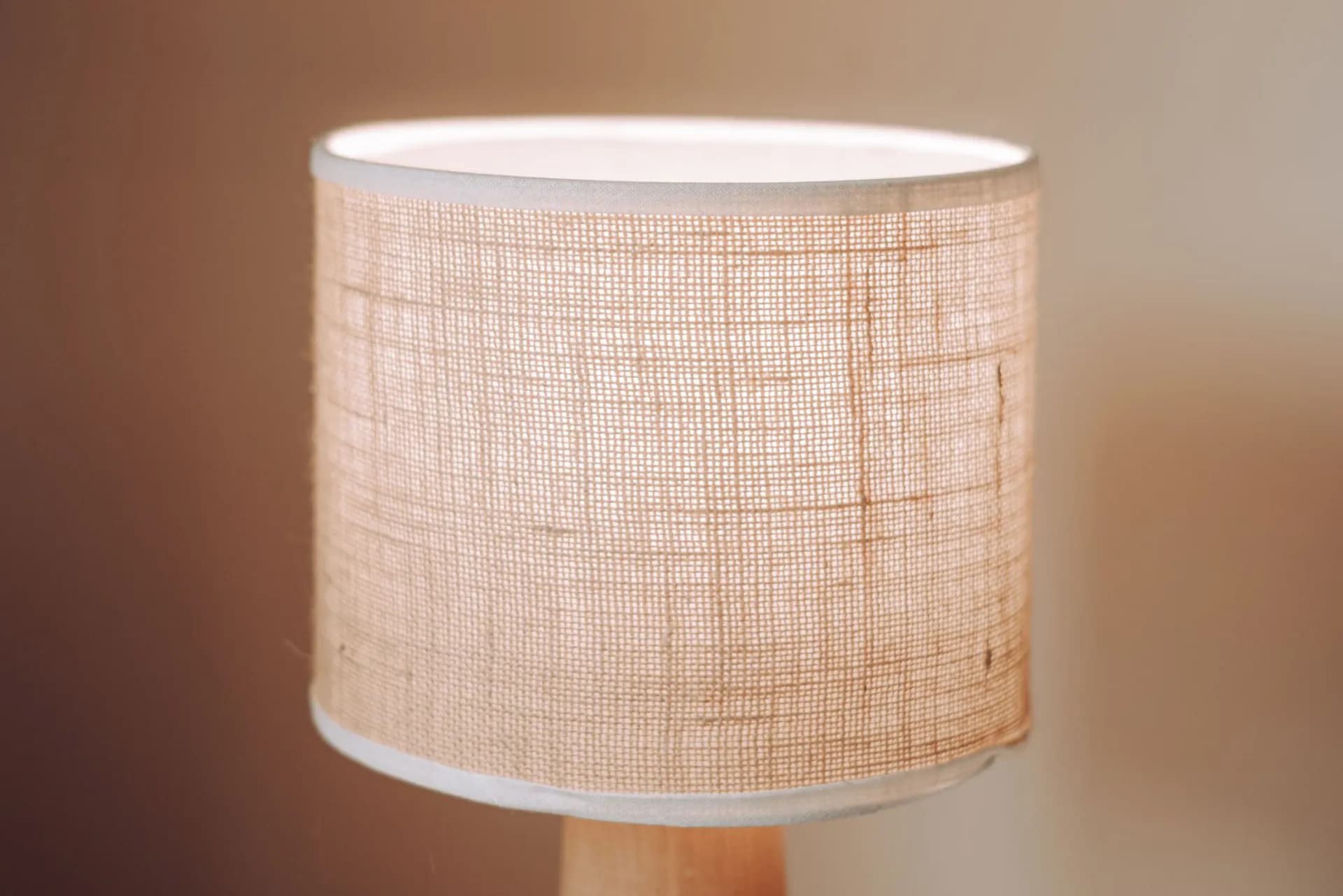
The effect changes with the cloth: a tight linen weave gives an even, gently textured glow; a pleated shade throws soft vertical shadow lines up and down its own surface; raw silk lets slightly more light through at its uneven, hand-woven threads. None of the nine fabrics is “better” — the right one depends on how bright or how moody you want the room to read.
What’s Actually Inside It
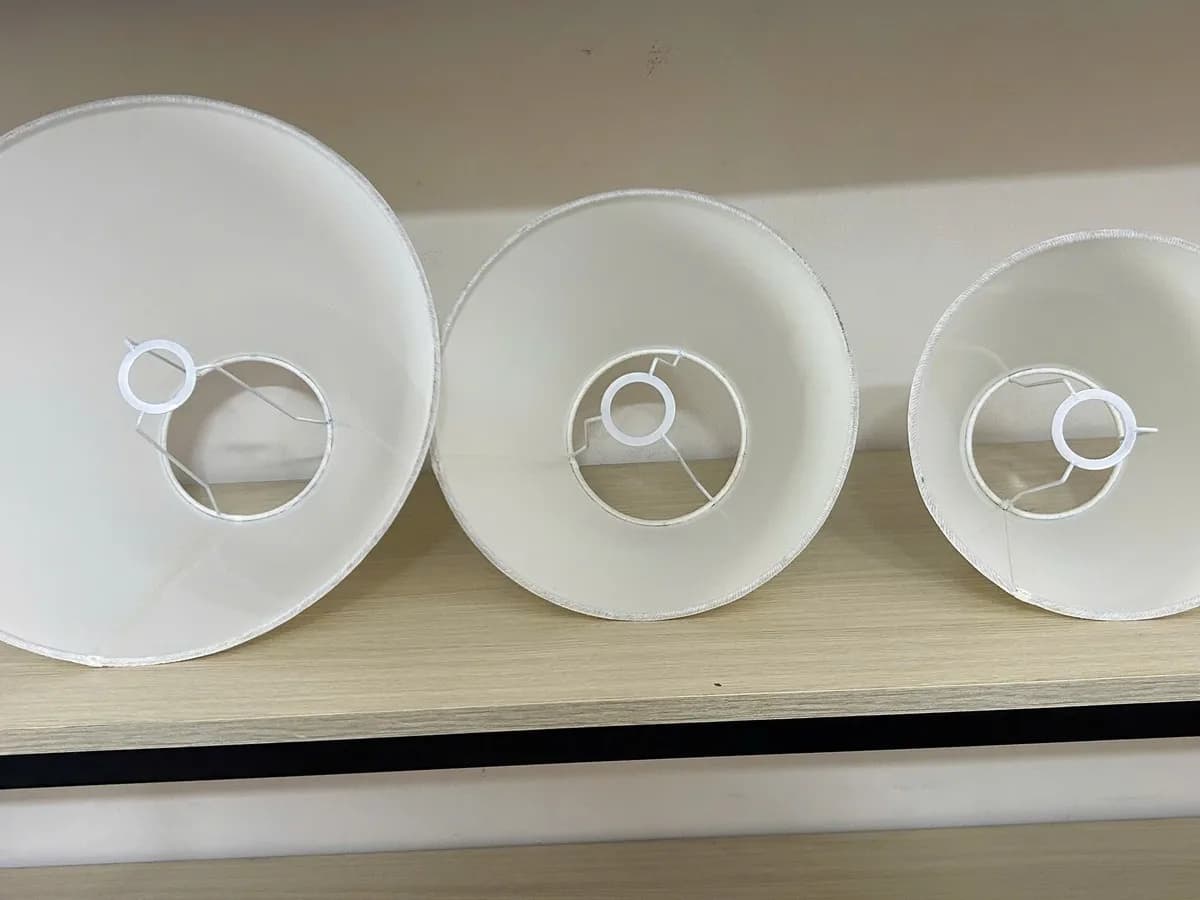
Under the cloth, a fabric pendant is a steel frame built to hold its shape and take a fitting — the fabric is the finish, not the structure.
Shapes We Build
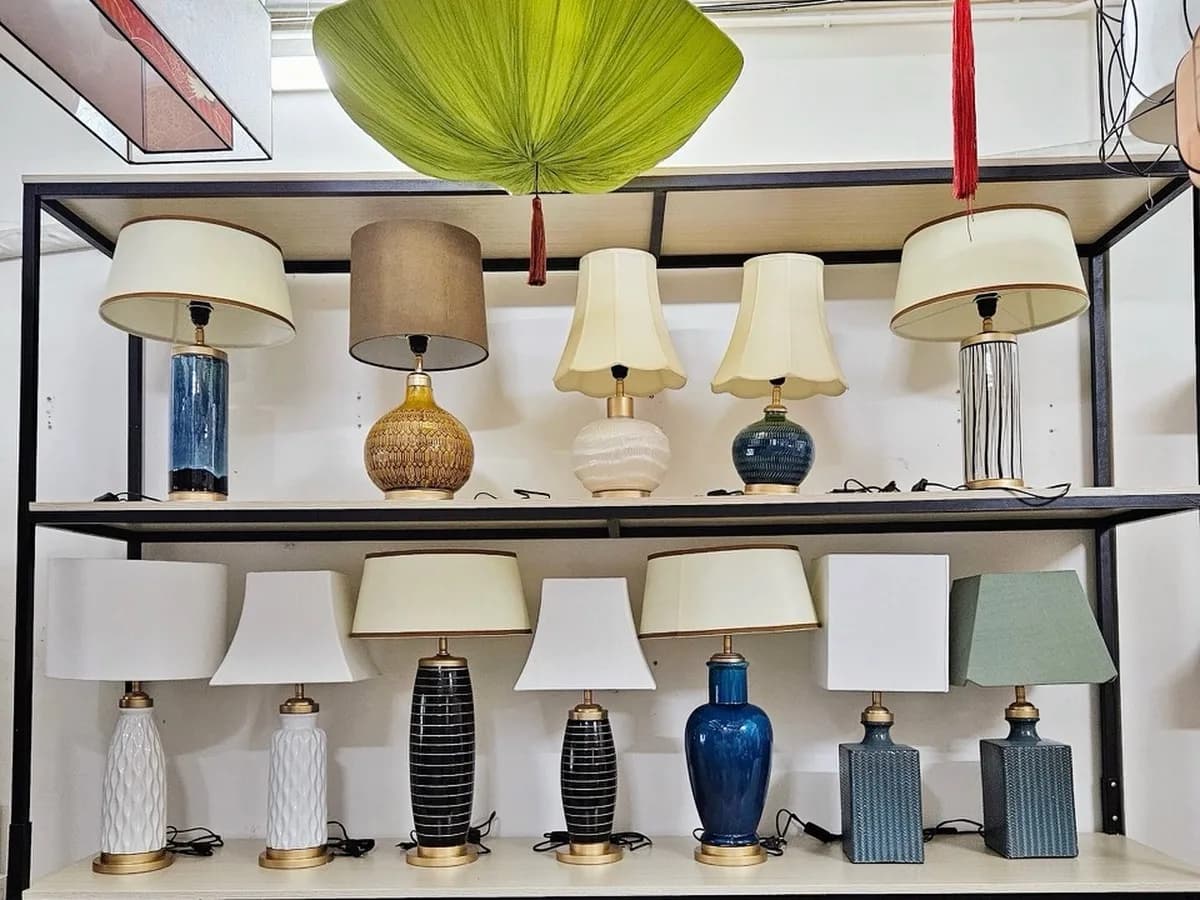
A pendant can be as simple as a single drum or cone, or built up into a cluster of several shades hung at staggered drops over a long table or a hotel lobby. Frames come in 28 powder-coat colours, and the fabric itself can be pleated, smooth, hand-painted or left raw depending on the shape chosen — the same shape reads very differently in linen versus raw silk. The seven shapes below are the ones asked for most often; all 18 are available on request.
If you already know roughly where the pendant is going — over a two-seat café table, a six-seat dining table, or a hotel corridor — tell us on WhatsApp and we will suggest a shape and drop rather than you guessing from a catalogue.
Drum
Straight-sided, the most requested shape. Works alone over a single table or repeated in a row of matching drops.
Empire
Tapered, narrower at the top than the base — a softer silhouette for a bedroom or living room rather than a bright commercial space.
Rectangular
Built for a long, narrow table — one elongated shade instead of a row of round pendants.
Pleated
Fabric hand-folded into fine vertical pleats, throwing soft shadow lines up the shade itself as it lights up.
Cone
Narrows to a point at the top — a simple, low-profile silhouette that reads well in a row.
Bell / Pyramid
A wider flare at the base gives a bell or pyramid outline more presence than a plain drum, without the full formality of an empire.
Oversized / Cluster
A single large-diameter shade, or several standard shades clustered at staggered drops, for a lobby, stairwell or long table.
The Nine Fabrics
KAHA works with seven core materials — two linen weaves, two silks, a shimmer taffeta, hand-woven raw tussah (“đũi”) and a heavy canvas — plus two special hand techniques, fine vertical pleating and a textured, vintage-leather-effect finish. Together they make up the “9 fabrics” figure used across KAHA’s site. Prices below are a fabric-only reference for an average-size shade (roughly 25–35 cm diameter, 20–30 cm tall) ordered ten pieces or more — the finished price in the collection above includes the frame, finish and labour on top.
Every material can also be dyed to a custom Pantone reference for a small surcharge, so a shade can match a brand colour or a room scheme exactly rather than approximately.
Which Fabric, in Which Room
These are the same notes KAHA gives clients choosing a fabric in person at the sample library — what each cloth actually looks and feels like, and where it tends to end up.
Linen xước
A linen with a light, natural slub texture that reads as a soft, understated luxury — gentle, even light. Suits 4–5 star hotels, boutique properties and resorts.
Linen tung
Linen flecked with fine, naturally scattered dark specks — a warm, vintage character with an amber-toned glow. Suits French-colonial, retro and boutique interiors.
Lụa tơ tằm
Traditional Hội An silk with a woven, raised pattern in richer colourways. Suits Asian-inspired resorts, spas and traditional-style restaurants.
Lụa 2 da
Two layers of silk woven in different colours, so the shade shifts tone as the light changes — the most premium of the seven materials. Suits 5-star suites and presidential or VIP boutique rooms.
Vải Tafta
A smooth, imported taffeta in pastel and brighter tones, colourfast and easy to keep clean. Suits 3–4 star hotels and serviced apartments needing several rooms refreshed quickly.
Đũi mộc — bestseller
Hand-woven raw tussah from Nam Định — a natural, muted tone with an irregular, distinctly handmade weave. KAHA's bestselling material, most often chosen for 4-star and design-led boutique hotels.
Vải bố
A heavy, natural-texture canvas with a rustic, industrial character. The most affordable of the seven, suited to mountain homestays, vintage cafés and industrial-style interiors.
An Honest Comparison
Three materials dominate the pendant-shade market, and each is genuinely the right answer for a different situation. Fabric gives the warmest, most diffused light and the longest realistic lifespan — three to seven years depending on the cloth — and can be re-shaded rather than thrown away when it eventually fades. It costs more upfront than paper or plastic and needs the care described further down this page.
Paper shades are light, inexpensive and give a soft, East-Asian character, but they tear, stain and discolour quickly — realistically six months to two years — which suits a temporary installation or an event more than a permanent fixture.
Plastic shades are the cheapest and mechanically the most durable, wiping clean easily, but the light they give is usually harder and less natural, with a more industrial look, and the material tends to yellow under heat over time. For a space meant to look considered and last for years — a home, a restaurant, a hotel room — fabric is the more honest long-term choice; for a short-run event or a very tight budget, paper or plastic are reasonable substitutes.
Sizing a Pendant
KAHA’s fabric pendant shades run from around 25 cm across for a small café fixture up to a full metre for a cluster over a long table or a hotel lobby — the chart opposite shows that real spread, not a rounded catalogue range.
As a general rule of thumb used widely in residential lighting guides — not a KAHA-specific standard — a single pendant shade looks proportioned at roughly one-third to one-half the width of the table underneath it. It is only a starting point: ceiling height, room size and how many people sit at the table all change the right answer, which is why we ask for a rough sketch or a photo before confirming a size.
Common Sizes We Build
Diameters KAHA builds most often, taken from real pendant orders — 400 mm is the single most common size across recent café and restaurant orders.
250 mm
Small café pendant
300 mm
Small–mid café / grill house
400 mm
Most common size
600 mm
Restaurant / hotel
1000 mm
Cluster / lobby
Hanging Height, by Location
These are general, widely published clearance guidelines — not a KAHA measurement or an electrical/building-code standard. Always check local code and ceiling height before fixing a final drop.
Dining table
≈70–90 cm above the tabletop, as a starting point
Kitchen island
≈75–90 cm above the counter, as a starting point
Stairwell / landing
Clear head height at every step, plus margin
Choosing by Room
None of this is a rule — it is the pattern KAHA sees across real orders, useful as a starting point rather than a constraint.
Dining room
A single drum or empire shade centred over the table, or a staggered trio for a longer table. Linen or hand-woven raw tussah keep the light warm without competing with the meal.
Living room
A larger, oversized shade as a focal point, or a smaller pendant paired with floor and table lighting rather than used as the only light source in the room.
Kitchen island
A row of two or three matching drum or cone shades at one consistent height, in a fabric that is easy to wipe down — canvas or taffeta rather than a delicate pleated finish.
Entry / stairwell
One oversized shade or a tall, staggered cluster that reads well from below and above, since a stairwell pendant is usually seen from more than one angle.
Low Ceilings in Vietnamese Apartments
Many apartments in Vietnamese cities have noticeably lower finished ceiling heights than a house or a hotel lobby, especially once a dropped plasterboard ceiling and any concealed air-conditioning ducting are accounted for. A pendant that would hang comfortably in a villa can leave uncomfortably little headroom in a tighter apartment.
A few adjustments generally help, as general guidance rather than a fixed rule: a flatter, shallower shape (drum or cone rather than a tall empire) uses less vertical space for the same visual presence; a shorter drop cable keeps the shade closer to the ceiling; and a single shade usually reads better than a tall staggered cluster, which needs more headroom to look intentional rather than cramped.
If you’re not sure how much drop your ceiling realistically allows, a photo of the room with the ceiling and any existing fixture visible is more useful to us than a measurement in isolation — send it on WhatsApp and we will tell you honestly whether a pendant suits the space or whether a flush-mount or wall light is the better fit.
Replacing an Existing Fixture
Most pendant orders aren’t going into a bare ceiling — they are replacing a builder-grade fixture, an old paper lantern, or a fitting left behind by a previous tenant. The electrical side of that swap — the wiring, the ceiling rose, whether it is safe to change — is a job for a qualified local electrician, and KAHA doesn’t provide electrical installation.
What we can help with is everything up to that point: sizing the new shade to the room, matching the frame colour to what’s already there if you’re replacing only some of the fixtures, and telling you honestly whether the existing canopy and fitting will take a KAHA frame or whether a small adaptor is needed. A photo of the current fixture, on or off the ceiling, is the fastest way to find out.
For Architects and Interior Designers
For a project that already has a lighting plan, KAHA can work directly from a measured drawing or an AutoCAD file rather than a rough photo — we redraw the fixture, confirm every dimension against your specification, and send a sample before production for sign-off. This is the same process used for custom lampshades more broadly; see our custom lampshades page for the full sketch-to-sample-to-production workflow.
For a multi-room or multi-property spec — matching pendant heights across a corridor, or the same fabric and finish across several room types — send the full schedule at once rather than fixture by fixture. We quote it as one job, which is usually faster and more consistent than working through it piece by piece.
Single Pendant or a Cluster
A single centred pendant is the simplest option and suits a small table or a focused reading spot. Over a longer table, a row of identical shades at one consistent height reads calm and orderly. A staggered cluster of three or five shades at different drops reads more sculptural and works well over an island, a lobby table or a stairwell landing where the ceiling height changes.
There is no universally “correct” arrangement — it comes down to the table shape, the room’s formality and how much visual weight you want the fixture to carry. Tell us the space and we suggest which of the three layouts below suits it.
Single, centred
Staggered trio
Row of five
Pairing With the Rest of the Room
A single fabric pendant over a dining table looks best as the warm, central layer in a room that also has some ambient light from elsewhere — recessed downlights, a floor lamp in a corner, or wall lights along a hallway — rather than as the only source of light in the space. Used alone, a pendant tends to leave the edges of a room noticeably dark once the sun goes down.
Mixing fabrics in the same room generally reads better than mixing unrelated finishes — a linen pendant over the table with a linen or raw-tussah floor lamp in the living area feels considered; a heavily patterned Lụa tơ tằm pendant next to a plain glass floor lamp can feel disconnected. If you already have other KAHA pieces — a floor lamp, a table lamp, wall lights — tell us and we’ll suggest a pendant fabric that sits well alongside them rather than fighting them.
Frame colour matters here too: repeating the same powder-coat colour across a room’s fixtures — pendant, floor lamp, wall light — is a simple way to make several separate pieces read as one considered scheme rather than a collection of unrelated purchases.
If Something Doesn’t Look Right
A pendant that reads “wrong” once it’s hung is usually one of three things, and each has a straightforward fix. Hanging too high or too low is a cable-length problem, not a shade problem — KAHA’s drop cable can be shortened or, within reason, extended after the fact rather than rebuilding the whole fixture.
A pendant that looks dim is more often a bulb choice than a fabric problem — a warm LED with a genuinely bright output behind a dense fabric like Lụa 2 da will always read softer than the same bulb behind an open-weave linen, and that’s the fabric doing exactly what it’s meant to. If a room needs brighter task light as well as the pendant’s ambient glow, that’s usually solved by adding a second light source rather than by chasing more brightness out of the pendant alone.
A shade that looks visually too small for the table underneath it is the most common sizing miss, and the easiest to avoid — it’s exactly why we ask for a table or room photo before confirming a size rather than quoting off a diameter alone.
Where Fabric Pendants Work Well
KAHA has hung fabric pendants across four kinds of space most often: coffee shops and cafés, where a warm pendant sets a table apart from the counter; restaurants, over both individual tables and long communal ones; hotel lobbies and reception areas, where a cluster or an oversized single shade fills a tall ceiling; and homes, over a dining table, kitchen island or stairwell. The photos below are from each of those settings.
Café
Restaurant
Hotel
Home
Not Sure a Pendant Is the Right Fixture?
A pendant hangs from a single point on a cable. If a space needs several arms of light from one fixture, a fabric chandelier is the closer fit; if it needs light close to a wall rather than the centre of the room — a corridor, a stairwell landing, either side of a bed — a fabric wall light usually works better than a pendant hung awkwardly off to one side. KAHA builds both in the same nine fabrics and 28 frame colours. Message us on WhatsApp with a photo of the space and we will say plainly which fixture type suits it, even if the answer isn’t a pendant.
Fitting Into a Vietnamese Apartment
Most apartments and new houses in Vietnam are finished with a plasterboard (gypsum) ceiling rather than exposed concrete, and a pendant that hangs from it needs a canopy that covers the mounting point cleanly rather than a fixture designed for a different ceiling type. KAHA’s frames are built with this in mind, so the finished pendant sits flush and tidy against a plaster ceiling out of the box.
If your ceiling is concrete, exposed beam, or something unusual — a bamboo or timber ceiling in a café, for instance — send a photo on WhatsApp before ordering. We will tell you honestly if a standard fitting works or if the frame needs a small adjustment.
Frame Colours and Finishes
Frames come in 28 powder-coat colours as standard, from matte black through natural brass tones to pale off-whites, so the visible metal edge of a pendant can disappear into the ceiling or stand out as an accent, depending on the room.
One finish is worth calling out specifically: an oval shade with a gold-painted trim around its edge, built in Lụa 2 da (two-tone silk) — a more formal, jewellery-like fixture for hotel suites and lounges rather than a plain drum. Need a black frame, a natural brass tone, or anything else across the 28 colours? Send a reference photo if you have one in mind.
Ordering to Your Own Measurements
Most pendant orders start with a photo of the room and a rough ceiling height and table size, not a formal drawing. We reply with a suggested shape, size and drop, and a quote — usually within 30 minutes — then send fabric swatches or a sample shade before anything goes into production. Nothing is built until you have approved what you saw.
Packing and Delivery
A fabric shade travels through five layers before it leaves KAHA: tissue paper wrapped around the fabric itself, shaped foam packed around the frame, a five-ply cardboard box, and a sealed QC stamp confirming the piece was checked before packing.
Delivery is arranged nationwide across Vietnam’s 63 provinces. For a hotel or restaurant project with several pendants going up together, we can also coordinate delivery to land close to your installation date rather than all at once.
Warranty and Care
Every pendant carries a 12-month warranty on the frame and stitching. Vietnam’s humidity is genuinely harder on a fabric shade than a dry climate — dust settles into the weave and, without airflow, colour can dull faster — so KAHA publishes the same three care rules we give our own hospitality clients:
1. Don't soak a glued shade
Only fabric stitched onto a steel frame can be soaked — water breaks the adhesive on a glued rim.
2. Lukewarm water, mild detergent
Wipe gently along the grain of the fabric with a well-wrung, soft cloth — don’t scrub.
3. Air-dry, out of direct sun
Dry naturally in a shaded, ventilated spot — a hot dryer or direct sun fades colour and shrinks the cloth.
If a shade is beyond a wipe-down — faded, torn, or simply tired after a few years — the frame is usually still sound. A re-shade in fresh fabric typically runs roughly 30–40% less than building new, under the same 12-month warranty. See our custom lampshades page for how that process works.
What a Quote Actually Includes
A quote for a fabric pendant is broken into the same parts every time: the fabric and colour, the frame and its powder-coat finish, any special technique such as pleating or a Pantone dye match, and delivery. Nothing is bundled into a single unexplained total, so it is clear which line to adjust if the price needs to come down — a different fabric, a simpler shape, or a larger quantity per design are the three levers that usually move it most.
For a hotel or restaurant with several fixture types on one order — pendants for the lobby, wall lights for the corridor, table lamps for the rooms — we quote the whole schedule together, since ordering several designs from the same fabric run is generally more efficient than sourcing each type separately. A written quote, itemised this way, is usually ready within 30 minutes of sending us your requirements on WhatsApp.
Sample First, Then Production
For a single household order, a fabric swatch is usually enough to confirm the choice — the fabric’s texture and colour matter far more in person than in a photo, so we send a physical swatch rather than asking you to decide from a screen. For a larger project — a café fit-out, a hotel floor, a restaurant refurbishment — we go a step further and build one finished sample shade before committing to the full run.
That sample is checked against the drawing or photo the order was based on, hung or photographed in context if useful, and only after it’s approved does the remaining quantity go into production. It adds a short amount of time to the front of a large order, but it is the reason a batch of forty matching pendants arrives looking exactly like what was agreed rather than a surprise.
Minimum quantities exist mainly to make a production run efficient — ten pieces for a project inside Vietnam, fifty for an international order — rather than as an arbitrary threshold. A single piece is always available to order directly from the collection above, without going through the sample step.
How to Read a Price
KAHA quotes in transparent line items — fabric, frame, finish and shipping — rather than a single bundled number, so it’s clear what drives the price up or down. Fabric is usually the biggest lever: heavy canvas and raw tussah sit at the affordable end, two-tone silk and hand-pleated finishes at the top, with linen and taffeta in between.
Shape and quantity move the price too — a pleated or double-edged shade takes longer to build than a plain drum, and a larger order of one repeated design costs less per piece than a single custom shade. Send your shape, size and quantity on WhatsApp for a detailed, itemised quote, usually within 30 minutes.
Fabric Pendant Questions
Any of KAHA’s nine fabrics and hand techniques — two linen weaves, two silks, shimmer taffeta, hand-woven raw tussah, heavy canvas, and the pleated or textured hand finishes — sourced from Vietnamese craft villages including Nam Định, Hội An and Vạn Phúc. Each diffuses light a little differently, so we can send swatches before you decide.
Yes. Send us your ceiling height and table dimensions, or a rough sketch or photo, and we suggest a shade size and hanging drop rather than you guessing from a catalogue photo. A sample is sent before production.
Yes, a fabric shade dims the same way any lampshade does — it simply diffuses whatever light output the bulb and dimmer send it, so a warm dimmable LED bulb behind the fabric reads even softer at lower settings.
Samples carry no minimum — we send fabric swatches and, where useful, a sample shade first. For a production run, the minimum is ten pieces for projects inside Vietnam and fifty pieces for international orders.
In almost every Vietnamese apartment or new house, yes — KAHA’s frames are built for a plasterboard ceiling as standard. For concrete, exposed beam or an unusual ceiling, send a photo first and we will confirm honestly before you order.
It depends on the fabric, shape and quantity. We confirm a realistic timeline together with your quote, which we aim to send within 30 minutes of hearing from you on WhatsApp.
Yes. A black-painted frame is one of the 28 standard colours, and for a more formal look we also build an oval shade with a gold-painted trim in silk, typically for hotel suites and lounges. Send a reference photo if you have one in mind.
Yes — either a single large-diameter shade or several standard shades hung together at staggered drops, for a lobby, stairwell or a long dining table. Tell us the space and we suggest which approach looks better.
Only fabric stitched onto a steel frame can be soaked — if the cloth is glued to a rim, water breaks the adhesive. Wipe gently along the grain of the fabric with a well-wrung, soft cloth in lukewarm water and a mild detergent, then air-dry naturally in a shaded, ventilated spot — never a hot dryer or direct sun, which fades colour and shrinks the cloth.
Often still yes, with a flatter shape (drum or cone rather than a tall empire) and a short drop cable. Send a photo of the room with the ceiling visible and we will tell you honestly whether a pendant suits the space or whether a flush-mount or wall light is the better option.
Yes. Send a measured drawing or AutoCAD file and we redraw it, confirm every dimension against your specification, and send a sample before production. For a multi-fixture or multi-room schedule, send the whole list at once — we quote it as one job rather than fixture by fixture.
Order a Fabric Pendant
Need a shade for a table or bedside lamp instead of a ceiling fixture? See our table & bedside lamps page. Have your own drawing or an exact size in mind? Our custom lampshades page covers the made-to-measure process. Or browse the full collection.
What to send us for a fast quote