


Fabric decorative lamp for hotels
from $60Get quote
A bedside lamp has two jobs, reading and winding down, and the shade decides which one it does better. This guide works through height, pairs, linings and bulbs.
Updated 29 November 2026 · 6 min read
In short
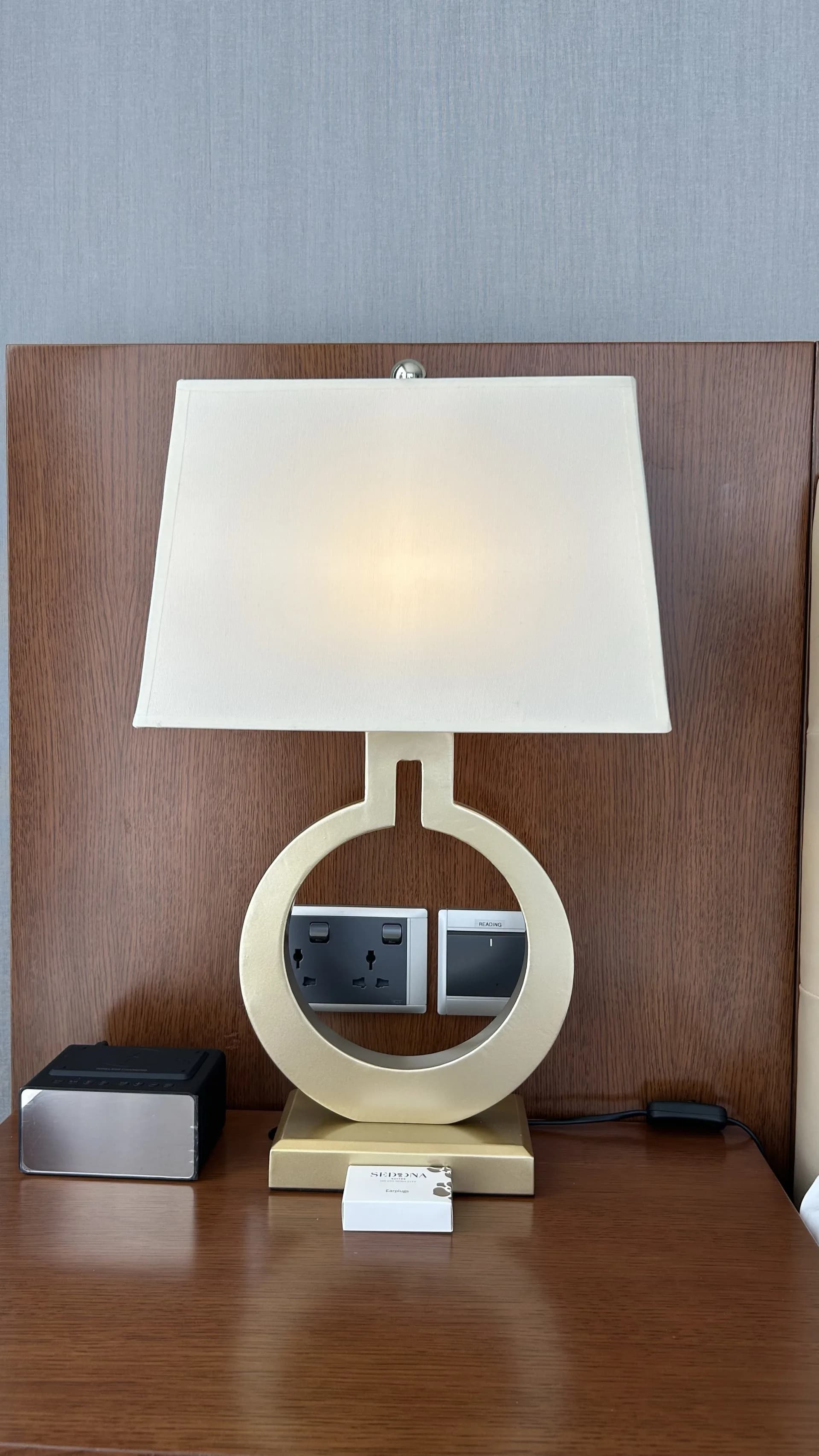
A bedside lamp shade is the fabric shade that sits over a lamp on a nightstand and decides how that lamp behaves in the room. Its cloth, width and height set whether the light suits reading in bed or a low evening glow, and a matching pair keeps both sides of the bed balanced.
Most bedside lamps are bought for how they look in a shop and then asked to do two different things at home. A reading lamp needs light that lands on the page. An ambient lamp needs light that spreads over the wall and ceiling and leaves the bed in a soft half-dark. A single shade can do both reasonably, but it will lean one way, and knowing which way before you buy saves a return trip.
As a rule of thumb, a tapered or drum shade with an open top and bottom pushes light both up and down, which suits a lamp that has to do a little of everything. A narrower, deeper shade keeps light more contained, which suits a partner who sleeps early. Our page on table and bedside lamp shades covers measuring a shade to a base; the rest of this guide is about choosing between shades that would all fit.
Think about the switch as well. A lamp you can reach from the pillow without sitting up gets used, and one with a switch on the cord behind the nightstand tends to be left on. Whatever the shade, leave a hand's width between the shade and the wall or headboard, so heat from the bulb does not mark either.
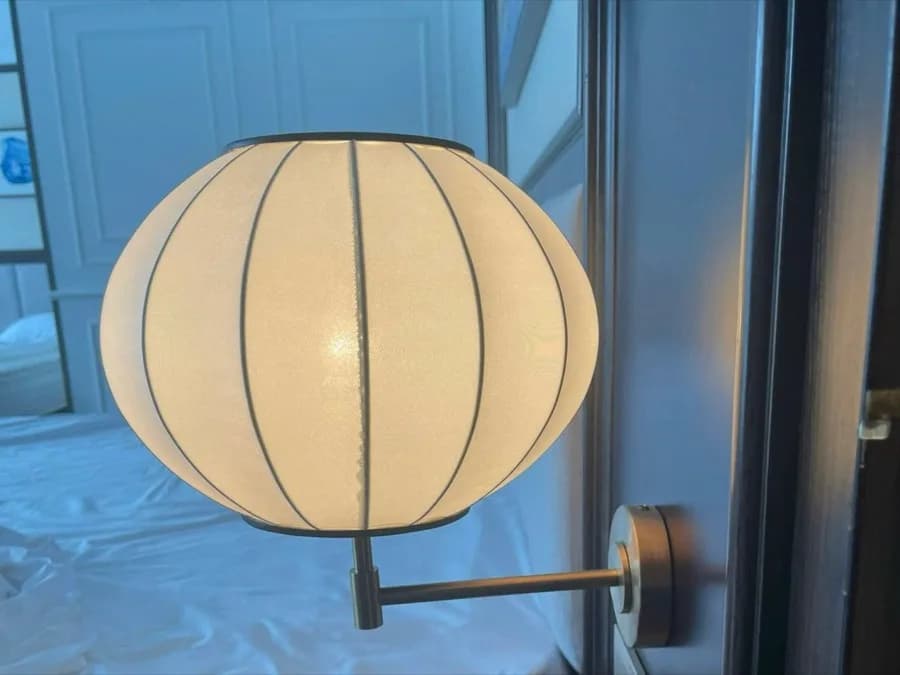

The most common complaint about a bedside lamp is glare, and it nearly always comes from the bulb showing under the shade. As a general rule, the bottom edge of the shade should sit at or just below eye level when you are propped up on pillows. That hides the bulb from your seat while still letting light fall on a book.
Eye level in bed is lower than most people expect and depends on the mattress and the pillows. Sit up the way you normally read, ask someone to measure from the floor to your eyes, then work back from there. The table sets out what changes when the shade is too high, too low or about right.
If the base is fixed, the shade is the only thing you can change. A taller shade on the same base lifts the glow upward and hides more of the bulb, and a shorter one brings the glow down to the page. Try the position with a book in your hand before you measure, because a few minutes of testing costs less than ordering the wrong height.
| Shade bottom edge | What you notice | Usual fix |
|---|---|---|
| Well above eye level | Bulb visible from the pillow, glare when reading | Lower the base or choose a deeper shade |
| At or just below eye level | Bulb hidden, light falls on the page and the wall | Keep it |
| Far below eye level | Light is dim at the page, wall stays dark | Raise the base or choose a shorter shade |
From the collection
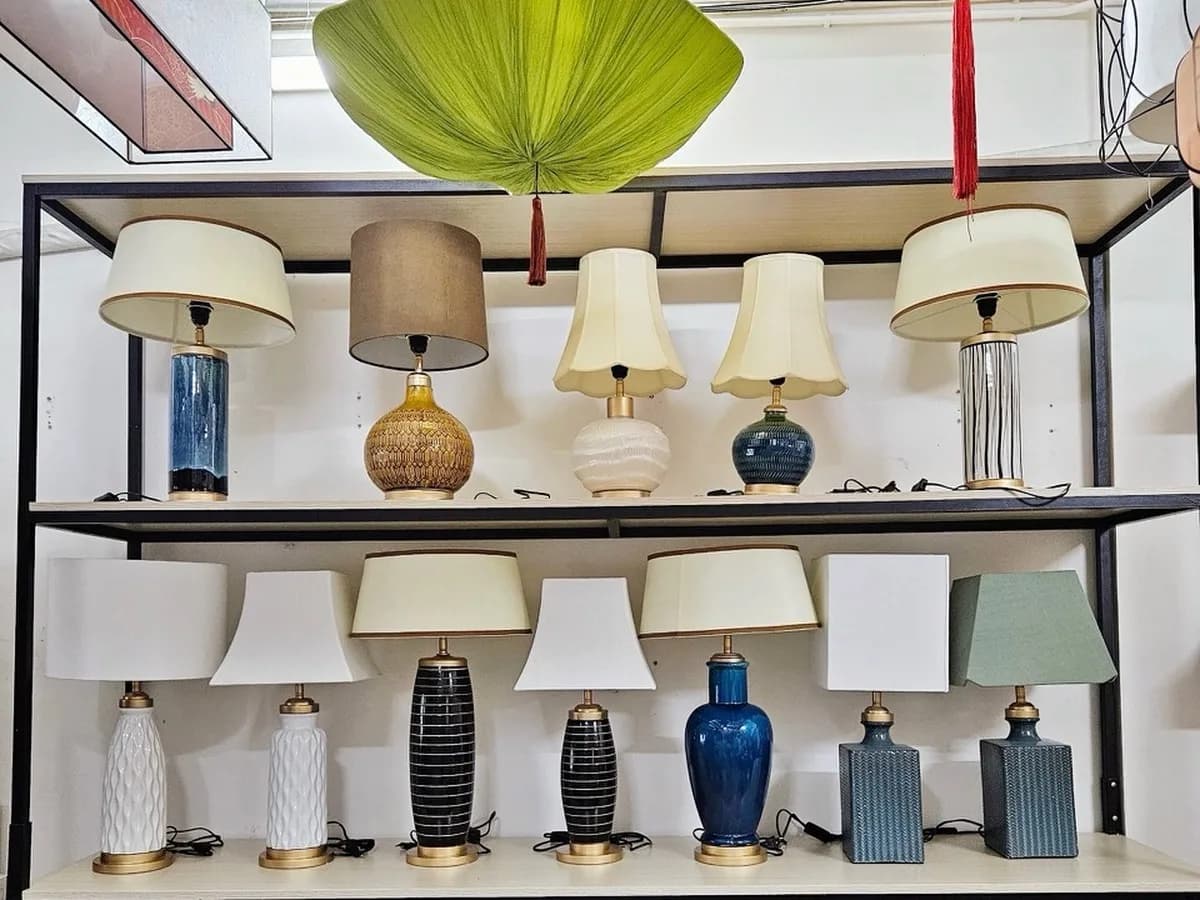
Finished pieces for nightstands and side tables. Any of these shades can be made on its own to fit a base you already own.


Indicative unit price, ex-works Ho Chi Minh City. Excludes freight, insurance and duties. Volume pricing confirmed on quotation.
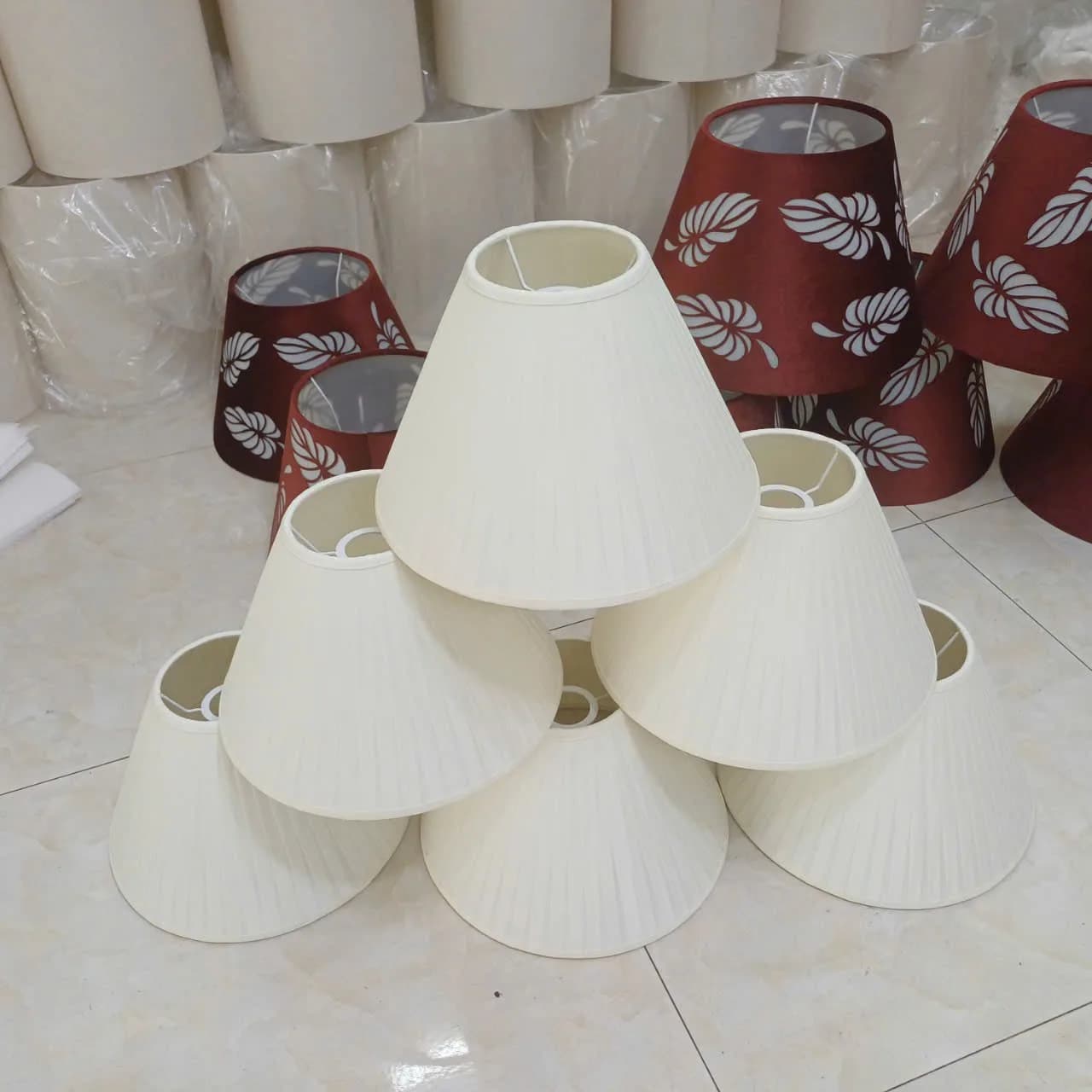
Two bedside lamps read as a pair when the proportions agree before the colour does. Same shape, same height, same cloth. A shade that is a few centimetres taller on one side makes the whole bed look off centre, even when no one can say why.
When we make a pair we work from one pattern and one batch of cloth, which keeps the colour and the weave consistent. That matters more with natural cloths such as linen, where two different rolls can differ in tone. If you are replacing one shade of an existing pair, send us a photo of the survivor with a tape measure beside it and we match the shape and cloth as closely as the original allows.
In a hotel the pair is usually identical on both sides. At home you can break that rule on purpose, using the same shade on two bases of different heights, and the shared cloth and shape still hold the arrangement together.
Hotels have settled on a few conventions because they have to work for guests who never chose the lamp. The shade is usually pale, the lamp is easy to reach from the pillow, and the lining is chosen for the mood of the room. We make hotel shades with three linings.
White lets light pass through the wall of the shade, so the lamp itself glows and the room is lit evenly. Gold keeps the light warm and sends it only up and down, which leaves the shade wall darker and the wall behind the bed washed with amber. Silver does the same with a cooler white. At home, gold is the one to borrow for a bedroom that is mostly used in the evening, and white suits a lamp that has to double as a reading light.
Source: KAHA hotel order terms (hotel-order-facts.json).
The wall behind a bed is often the largest surface the lamp lights, so the colour the light takes on that wall matters as much as the colour of the shade. A pale cloth throws a clean, even wash. A warmer cloth tints the wall towards amber, which flatters timber headboards and cream paint and can look yellow against a cool grey.
Brushed linen is the cloth we use most for bedsides: light brushed texture, soft and understated. Fleck linen carries fine dark specks and gives a warmer, amber glow with a vintage feel. Two-tone silk uses two layers in different colours and shifts tone with the light, which suits a bedroom where the lamp is a feature. Taffeta is smooth, colourfast and easy to keep clean, a practical choice for a child's room or a guest room that is dusted often. Our guide to silk lampshades goes through the silks in more detail.
Hold a swatch against the wall colour with a bulb behind it before you commit. We send fabric swatches free of charge, and the test takes a minute in the room where the lamp will live.
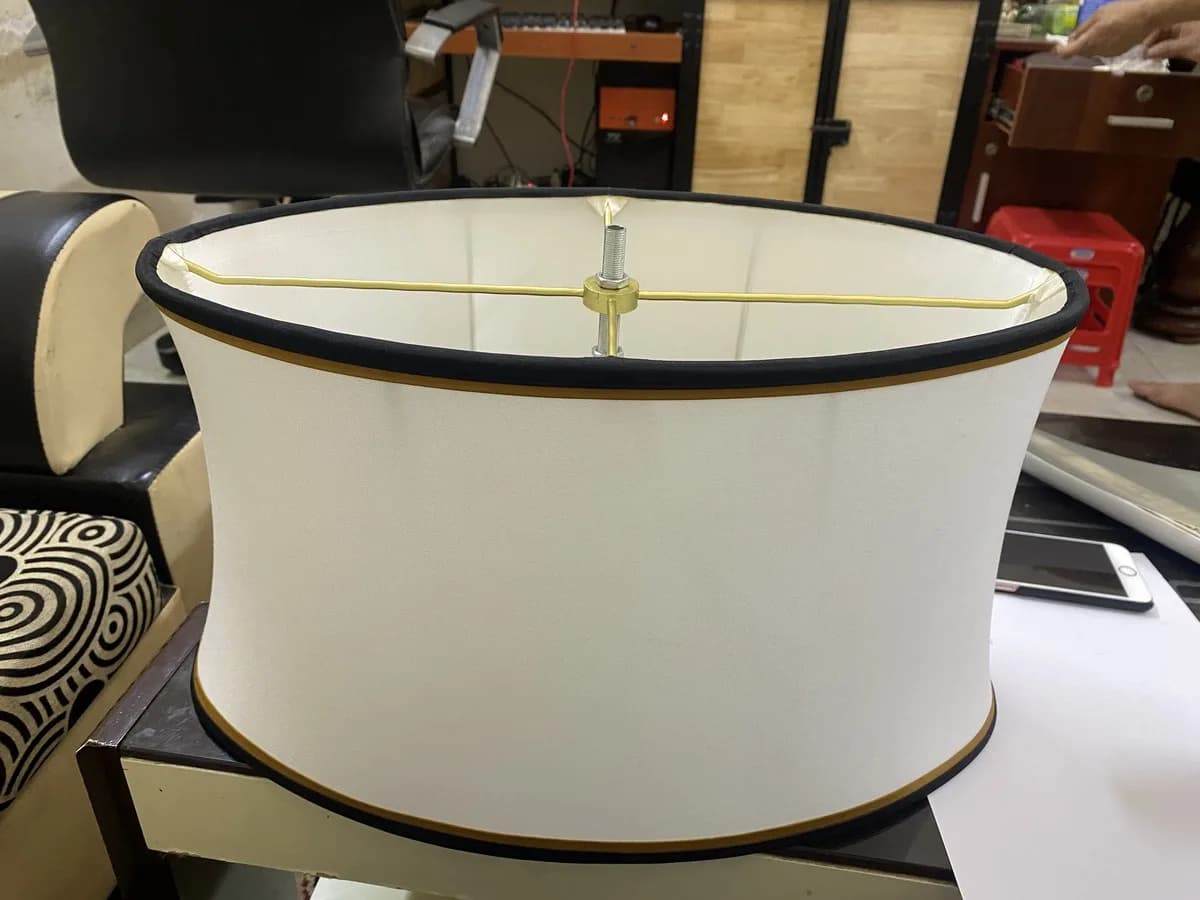
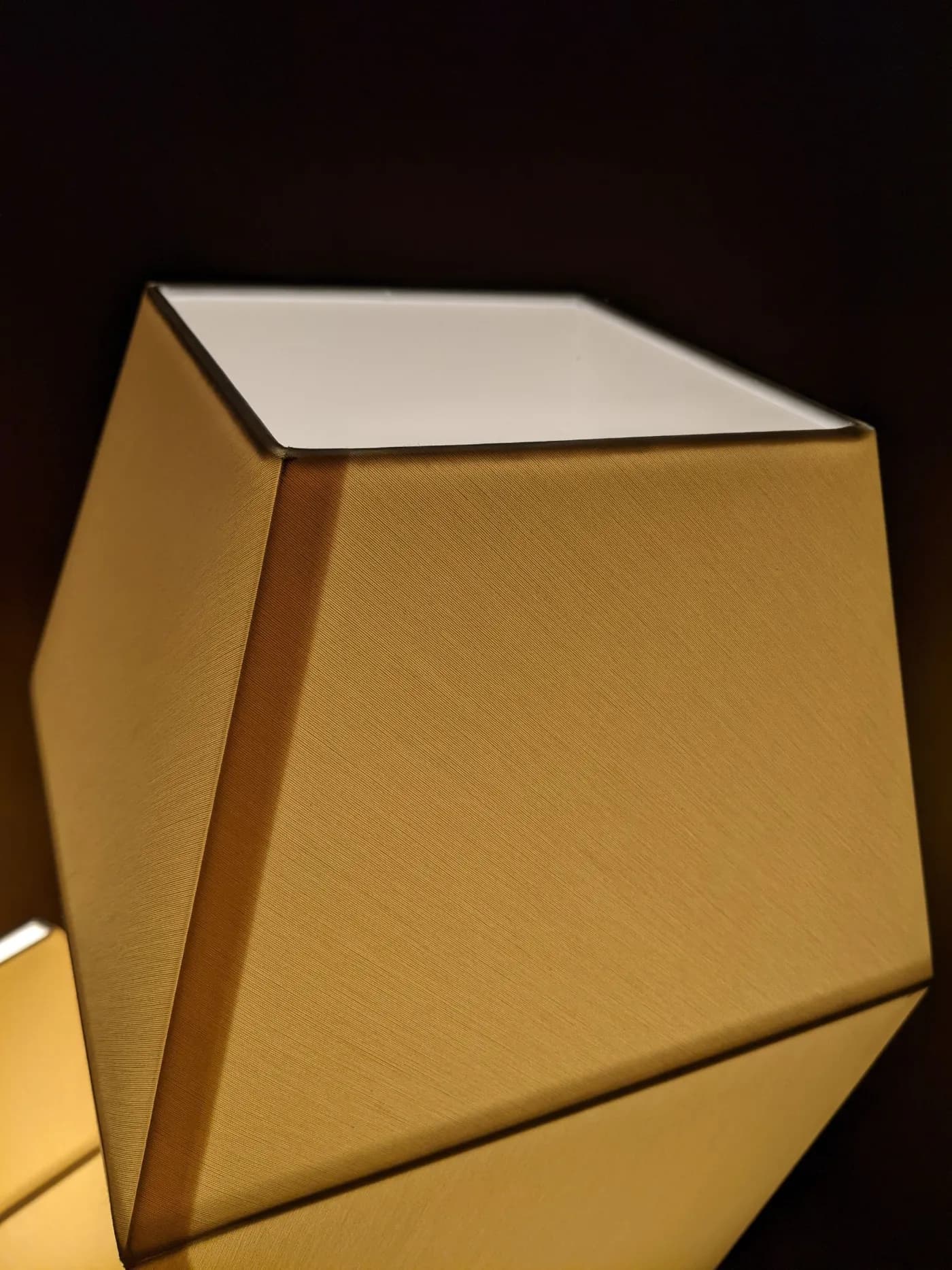
Every shade we make has a maximum bulb of 20 W, because the cloth is not treated with a fire retardant. For a bedside lamp that is rarely a constraint. Most LED bulbs made for lamps draw a fraction of that, so you can choose on colour temperature and dimming without going near the limit.
Two general tips. Pick a warm white bulb, usually described as 2700 K, for a bedroom, and choose a bulb marked dimmable only if your lamp or wall switch has a dimmer that suits LED, because the two have to be compatible. A cooler, lower-wattage bulb is also kinder to the cloth, and the chart shows how long each of our seven priced cloths lasts indoors under normal use.
Source: KAHA fabric list (kaha-fabric-types.json). Indoor use; dust with a soft brush, the cloth is not washable.
For one or two shades, send a photo of the base and tell us how you read in bed. We suggest a shape, cloth and size, and you can look at finished shades at our sample library in Phu Thanh by appointment. Fabric swatches are free. We deliver across Vietnam; the customer pays shipping, and we cover it on domestic orders from 10 million VND. If you are in the city, see our page for a lamp shop in Ho Chi Minh City.
For a hotel or a block of rooms, the same shade is made in quantity, and custom work usually starts at 10 pieces per design. Our guide to linen lampshades covers the cloth most often chosen for bedsides, and how to order sets out the steps from photo to delivery.

Next step
Table and bedside lamp shades
Shades built to fit the base you already own, with sizing help from a photo and delivery across Vietnam.
Questions
As a rule of thumb, the bottom edge of the shade should sit at or just below your eye level when you are sitting up in bed. That hides the bulb and avoids glare while still lighting the page.
20 W per shade. Our cloth is not treated with a fire retardant, so we set that limit on every shade. A dimmable LED bulb of a few watts is the usual choice for a bedside.
No. The cloth is not washable. Dust it with a soft brush or a dry cloth, and keep it out of direct sun to slow fading.
Yes. The customer pays shipping, and we cover shipping on domestic orders from 10 million VND. Every piece is lit and checked, then packed in a five-layer carton with PE foam.
Catalogue pieces start from 1. Custom work for a project usually starts at 10 pieces per design. For a pair at home, send a photo of your base and tell us how you read in bed.
Keep reading