


Set of 4 — Pleated silk disc pendants in white and green
from $235Get quote
A pleated shade is folded by hand before it is ever fitted to a frame. This guide covers the three common pleat styles, how depth changes the glow, and what to expect when you order a run.
Updated 29 November 2026 · 7 min read
In short
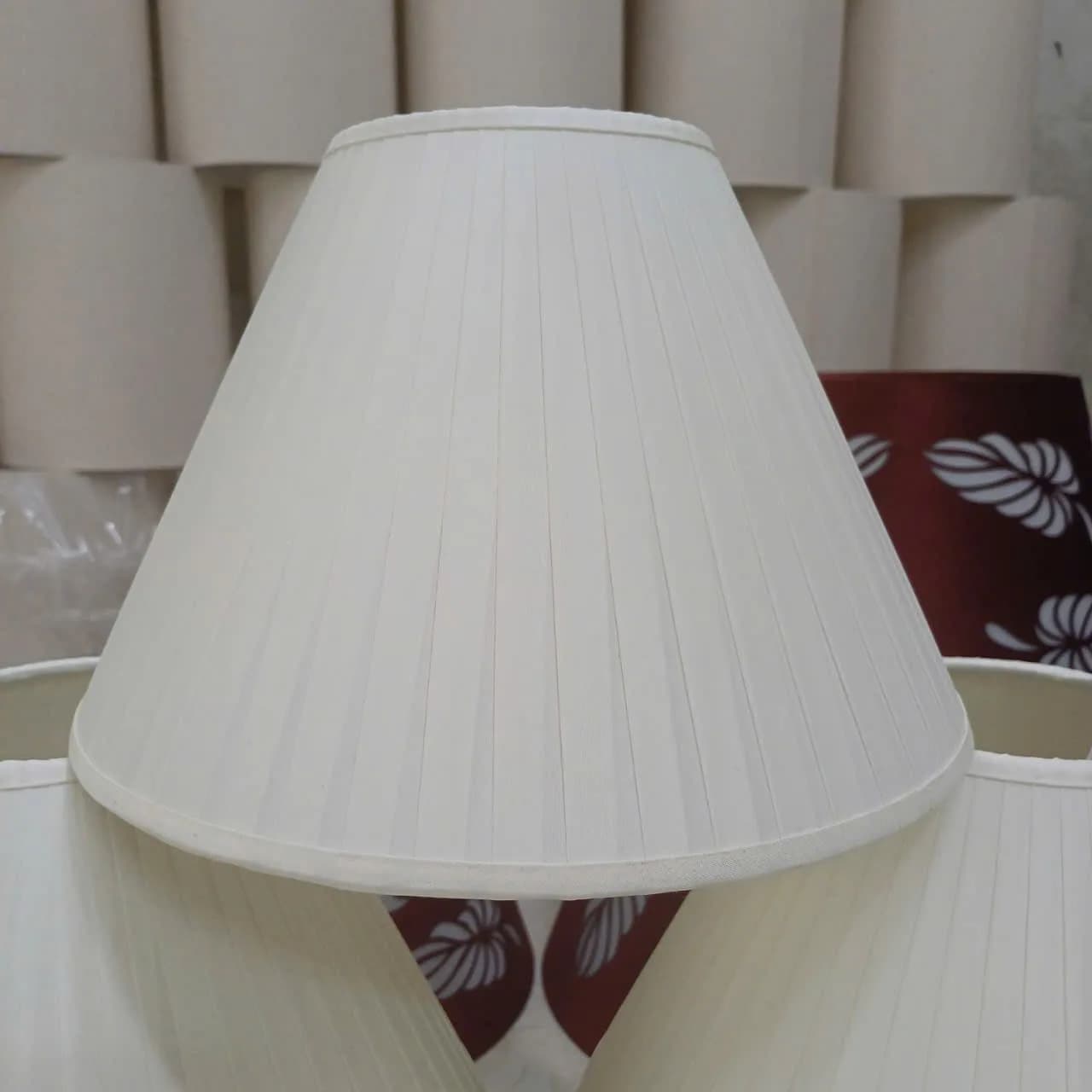
A pleated lampshade is a shade whose cloth has been folded into regular creases, then set and stretched over a frame so the folds run from the top ring to the bottom. The pleats add depth to a plain fabric, throw fine lines of shadow across the surface when lit, and give a flat cloth more body.
Pleating starts with a strip of cloth cut longer than the shade needs to be. The extra length is what the folds consume. Each fold is creased along the grain, pressed so it holds, and then the whole strip is gathered to the top and bottom rings of the frame so the creases line up from one edge to the other. Because the cloth has to be folded evenly, the work is done by hand and checked by eye along the way.
This is a finish we offer on top of any shape we draw, so if you already have a design in mind, our page on custom lampshades made to your drawing explains how a sketch or a size becomes a sample. This guide stays with the pleat itself.
The edges matter as much as the folds. Each pleat has to meet the rings at the same angle, or the folds drift and the shade looks twisted once it is lit. A well-made pleated shade keeps its pleats parallel from the top ring to the bottom ring, with even spacing around the whole circumference. When you hold a sample, turn it under a light and look for any pleat that leans, bunches or opens wider than its neighbours.
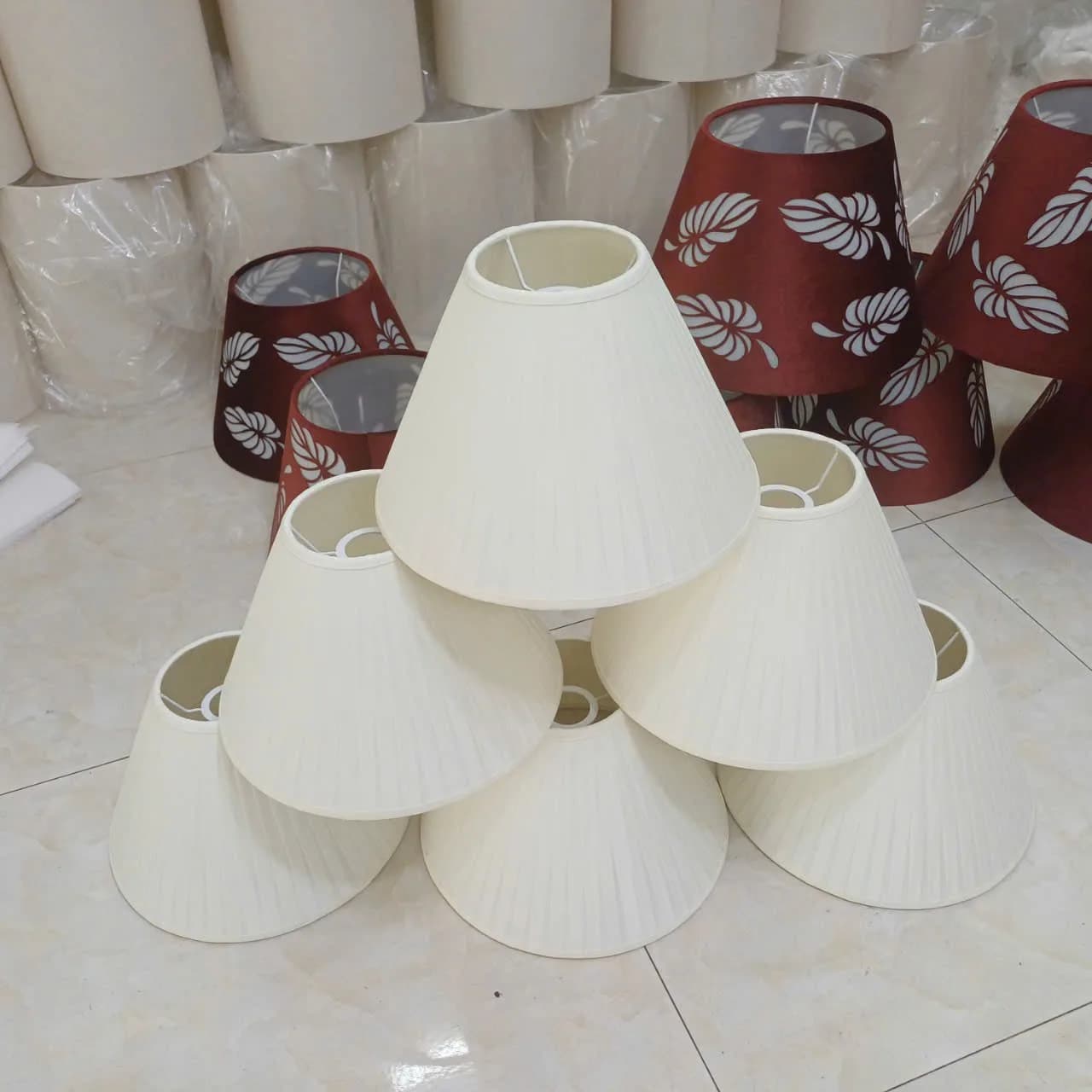
Makers use a handful of pleat styles, and the names vary a little from workshop to workshop. These three are the ones you will meet most often, and the difference is mainly in how the fold lies.
Knife pleats all lean the same way, like the teeth of a saw. They read as crisp and tailored, and they suit a straight drum or an empire cone. Box pleats fold outwards in pairs so each pleat shows a flat face with a small channel beside it. The result is a more architectural surface, a little heavier, and better with a wider shade. Sunburst pleats fan out from the centre of the top ring and widen towards the bottom, so the folds spread like rays. They work well on shallow, wide shades and on flat discs.
| Pleat style | How it lies | Look when lit | Shapes it suits |
|---|---|---|---|
| Knife pleat | Every fold leans one way | Fine, even lines; crisp edge | Drums, empire cones, tall shades |
| Box pleat | Folds in pairs, flat face between | Broader bands of light and shade | Wide drums, large pendants |
| Sunburst pleat | Folds fan from the top ring | Rays widening towards the rim | Shallow cones, discs, ceiling shades |
From the collection
Finished pieces with a hand-pleated finish. Any of them can be made again in another cloth or size.


Indicative unit price, ex-works Ho Chi Minh City. Excludes freight, insurance and duties. Volume pricing confirmed on quotation.
Depth is the distance a fold stands proud of the surface. A shallow pleat, only a few millimetres deep, behaves almost like a plain shade: the glow stays even and the pleat shows mainly as a texture. A deep pleat creates real valleys in the cloth. Light passes through a double or triple thickness where the cloth folds over, so those lines glow dimmer, and the shade shows a gentle vertical rhythm of light and shade.
As a rule of thumb, deeper pleats take more cloth and produce a softer, dimmer overall glow, while fine shallow pleats keep the shade brighter. A pale cloth with deep pleats is a good match for a bedside where you want the lamp to feel calm. A shallow pleat in a lighter fabric suits a dining table, where you want enough light to see the food.
Depth also interacts with the lining. Hotel shades are offered with three linings: white, which lets light pass through the wall of the shade, gold, which keeps the glow warm and throws it only up and down, and silver, which does the same with a cooler white. Behind a deep pleat, a white lining lets the folds show as soft ribs, while a gold lining makes the whole shade glow warmer and quieter.
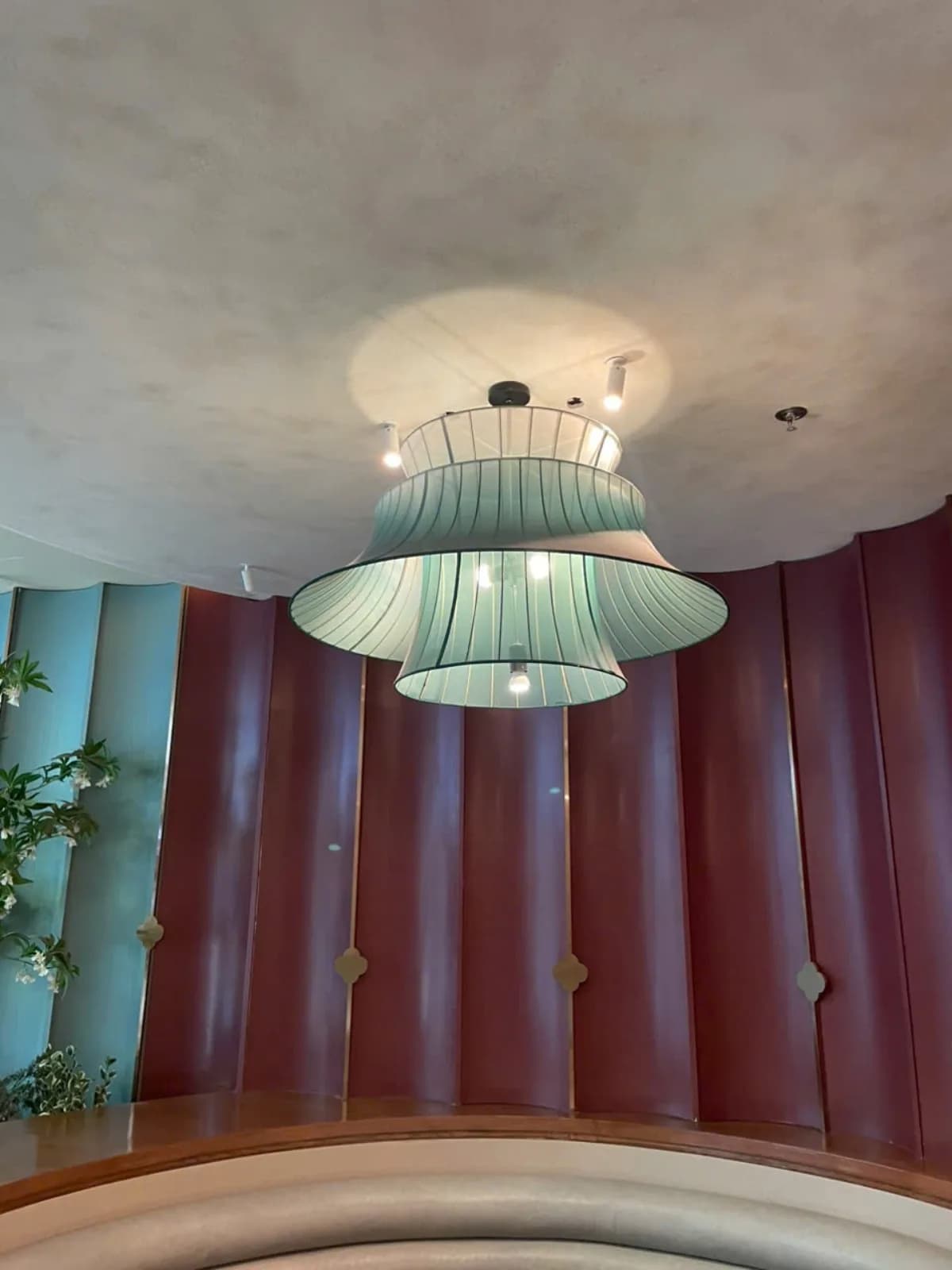
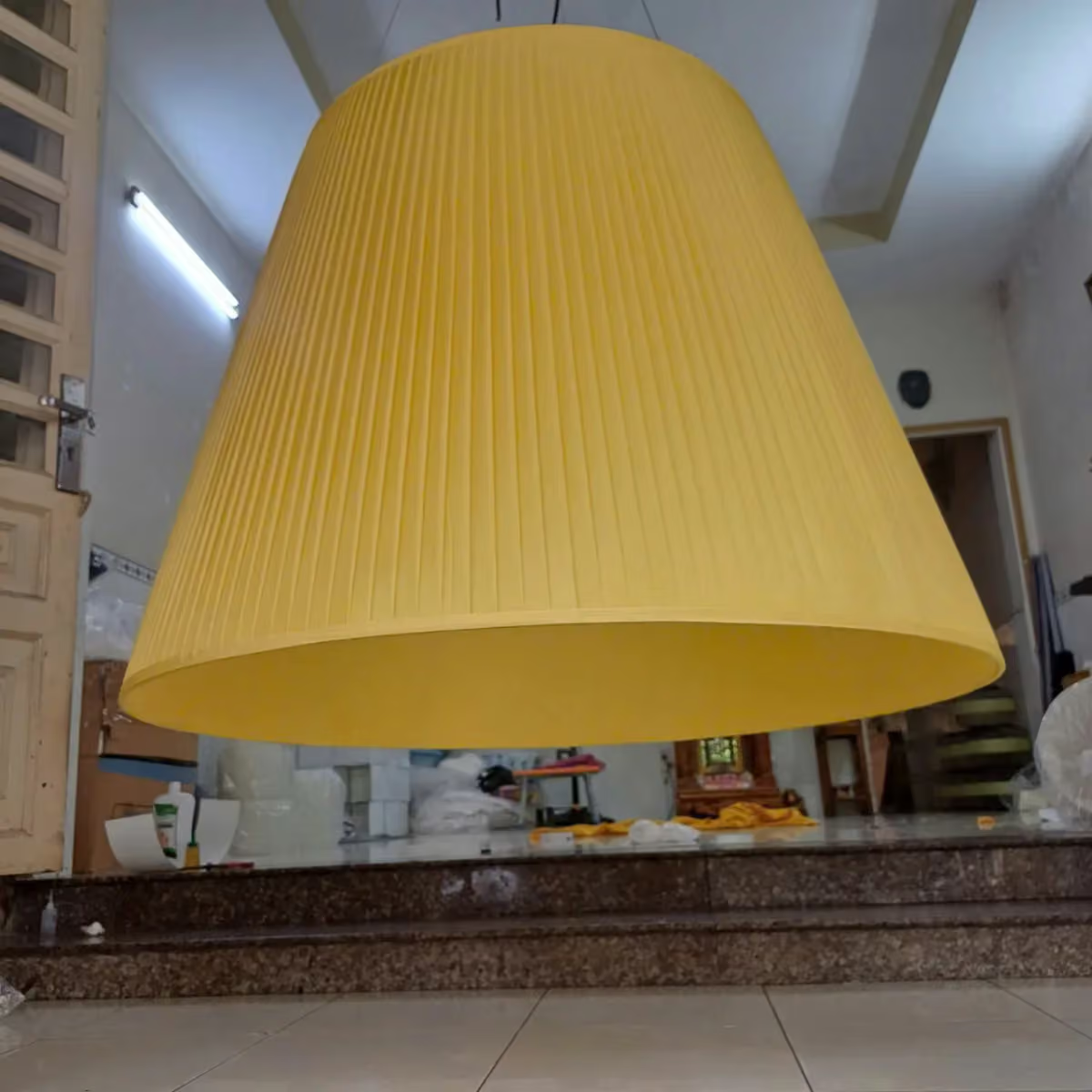
On a pendant the shade is seen from below and from across the room, so the pleat lines carry the eye upward and make a drop look taller. A pleated drum or a pleated disc over a table gives a soft pool of light with a gently textured edge. Our standard pendant drop is 1–2 metres, and a pleated shade holds its shape well along that length because the folds add stiffness to the cloth.
On a table or bedside lamp the shade sits at eye level, so the pleats are examined closely. Fine, regular knife pleats read as polished, and a slightly looser box pleat reads as relaxed. Pleats also hide small marks and the faint shadow of the harp better than a flat cloth does. Our page on table and bedside lamp shades covers sizing a shade to the base you already own.
As a rule of thumb the number of pleats grows with the diameter of the shade, so that each fold stays about the same width whether the shade is a small bedside cone or a wide pendant. Fewer, wider pleats make a bolder pattern. Many fine pleats make a quiet one, closer to a plain cloth from a distance. The right balance is easiest to judge on a sample held at the height where the lamp will hang.


Pleats need a cloth that folds cleanly and then stays folded. Light, supple fabrics take a fine crease easily. Thicker cloths such as heavy canvas hold a fold but make a broad pleat, so they suit a larger box pleat rather than a fine knife pleat. A cloth with a pronounced slub, such as raw tussah silk, produces a more irregular pleat, which some people find charming and others find untidy, so it is worth seeing a swatch first.
The chart shows the published price band per shade for the seven materials with price data. A pleated finish uses more cloth and more labour than a plain shade of the same size, so expect a pleated shade to be quoted above the plain version of the same cloth. Our guide to silk lampshades goes through how the silks behave once the lamp is on.
Source: KAHA fabric list (kaha-fabric-types.json), converted at 26,000 VND per USD. Large pendants and custom shapes are quoted separately.
Because pleating is manual, a run of pleated shades is only as even as the standard set at the start. That is why we make a sample first. You approve the pleat style, the depth and the cloth on the sample, and the rest of the run is matched to it. Custom work usually starts at 10 pieces per design in Vietnam and 50 for export, and wholesale quotes step at 10, 50, 100 and 300 pieces per design.
A finished sample usually takes 7 days, and fabric swatches are free. A finished sample is charged at its value, except for hotel projects, where it is free. Once the sample is approved, production takes 7–10 days for up to 100 pieces and 10–15 days above that. The deposit is 50% on approving the sample and 50% before delivery.
When you brief a run, say which pleat style you want, roughly how deep, which cloth, and the finished diameter and height. A photo of a shade you like is as useful as a drawing. We return a sample drawn to that brief, and you can ask for a change in pleat depth or cloth before the run starts, which is far cheaper than changing it after.
Source: KAHA operating terms (hub-facts-xuong-den-vai.json, confirmed by the owner). Shipping time is not included.
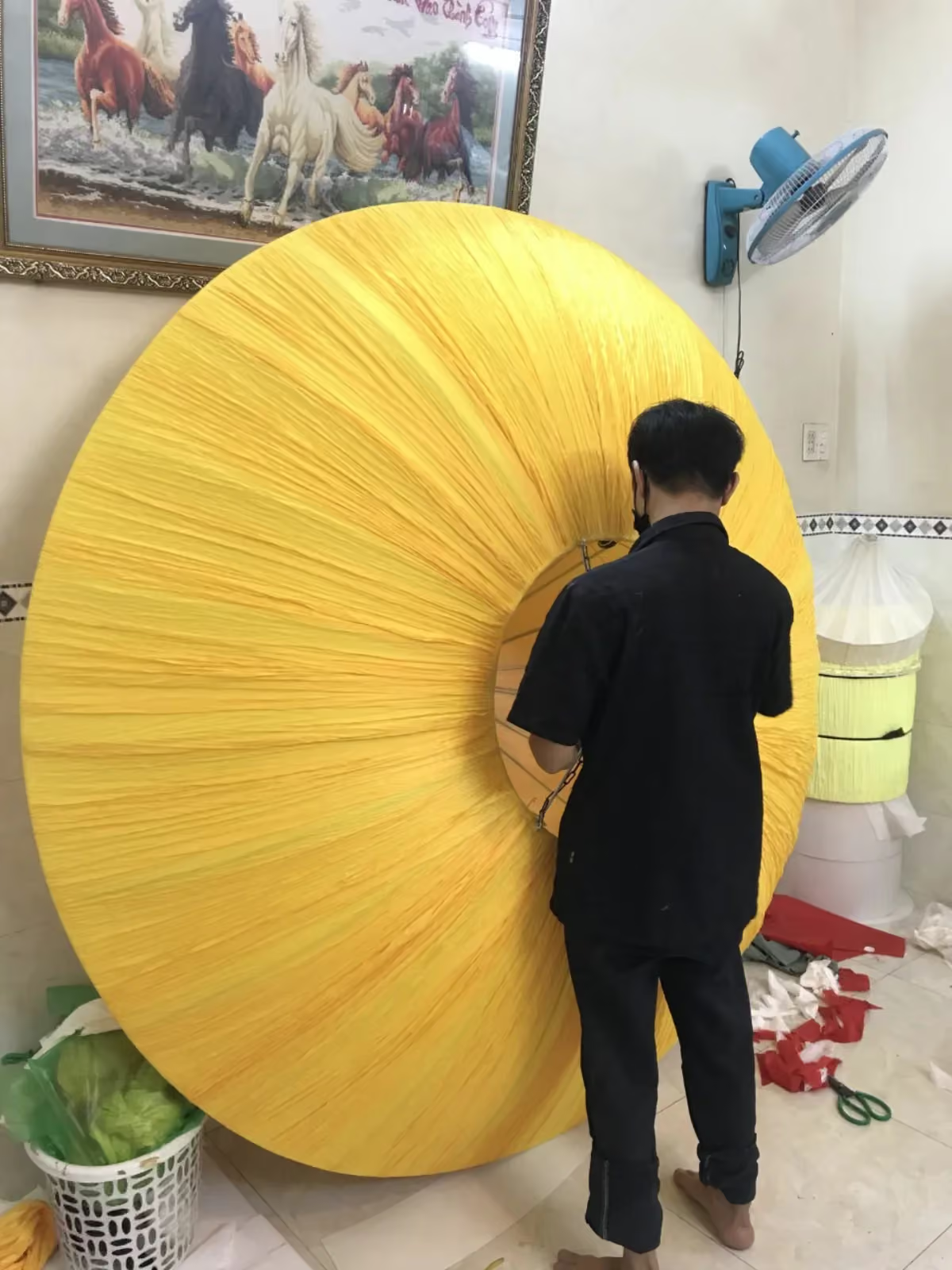

Pleats collect dust in the valleys, so a pleated shade is worth dusting a little more often than a plain one. Use a soft brush and follow the line of the folds from top to bottom. The cloth is not washable, and water will mark it and loosen the set of the pleats.
If a pleated shade wears out but the frame is sound, the frame can be re-covered. Re-shading an existing frame costs about 80–90% of the price of a new shade, all-in. For a run of shades in a hotel or restaurant, that is often easier than replacing the fittings as well. When you are ready to talk numbers, ask for a quote with the shape, the cloth and the quantity.
Next step
Custom lampshades, made to your drawing
Send a sketch, a photo or a size and we draw the shade, choose the cloth and make a sample before any run.
Questions
Slightly. Dust settles in the folds, so brush it off with a soft brush along the line of the pleats. The cloth is not washable, and water will mark it.
Most of our ten fabrics can take a pleat, but light, supple cloths give the finest result and heavier ones such as canvas suit a broader pleat. A swatch shows you how a cloth folds before you commit.
Deeper pleats put a double thickness of cloth in the way in places, so the overall glow is softer and a little dimmer. Shallow pleats keep it brighter. Bulbs stay within 20 W for every shade.
Catalogue pieces from one. Custom pleated work usually starts at 10 pieces per design in Vietnam, and export orders from 50. Wholesale quotes step at 10, 50, 100 and 300 pieces.
A finished sample usually takes 7 days. After approval, production is 7–10 days for up to 100 pieces and 10–15 days above 100. Rush orders are possible from 3 working days with a 10–20% surcharge.
Keep reading