


Raw tussah silk teardrop lampshade for cafés
from $35Get quote
In a wabi-sabi room the light is part of the texture. Here is how to plan it, which cloths take it best and where to set the lamps.
Updated 29 November 2026 · 7 min read

In short
Wabi-sabi lighting is a way of lighting a room that values quiet, imperfect and aged surfaces. It uses low, warm light from several small sources, shades made from rough natural cloth, and lamps set below eye level so that shadows stay soft and the room feels slow.
A conventional room is lit from above, evenly, so that nothing is hidden. A wabi-sabi room works the other way round. It wants some corners to stay dim, so the eye settles on a worn timber edge, a clay wall or a hand-thrown bowl. The light supports that mood by staying low in output and warm in tone, and by coming from several small points instead of one bright fixture.
Wabi-sabi is a Japanese idea of beauty found in things that are modest, worn and incomplete. It is not a style you buy in one piece. In lighting it means choosing fittings that look as if they belong to the room and have been there a while. Plain forms, natural cloth and a matte finish suit it better than shiny metal or crisp white plastic, and a lamp that is slightly imperfect is welcome.
If you are choosing the lamps themselves, our page on wabi-sabi fabric lamps made to measure shows the cloths and shapes we build. This guide is about the lighting plan around them.

A simple plan has three layers. Ambient light is the general glow of the room, often a single dimmed pendant or a wall washer kept well below full output. Task light is a small lamp at the place where something is done, such as a reading corner or a tea table. Accent light is a low glow on a surface, such as a lamp on the floor beside a wall that casts a soft arc of light upward.
The key is to avoid stacking all three at full strength. A wabi-sabi room usually has two or three lamps lit at a time, each fairly dim, and the evening settles into pools of light instead of a flat wash. A dimmer on each circuit does more for the mood than any single choice of shade.
A useful trick for the ambient layer is to bounce light off a surface. A low lamp placed close to a textured wall, such as limewash, clay or timber, throws a soft gradient up the wall and shows the surface better than a bright overhead light would. The same lamp aimed at a smooth white wall does very little, so the wall matters as much as the shade.

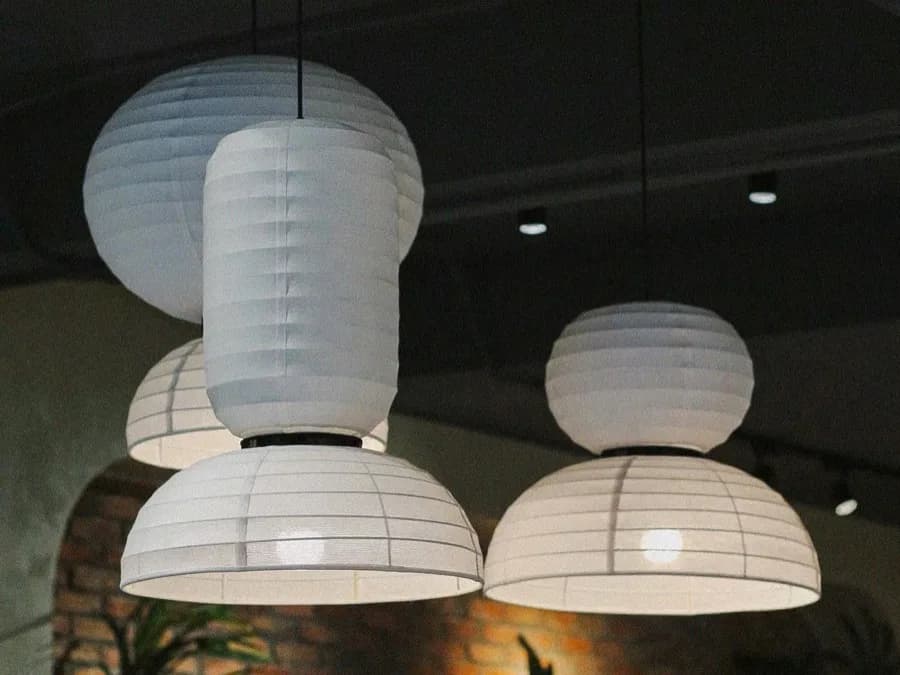
From the collection
Finished pieces in Japanese-inspired, linen and raw tussah cloths. Any of them can be made again in another size.


Indicative unit price, ex-works Ho Chi Minh City. Excludes freight, insurance and duties. Volume pricing confirmed on quotation.
Cloth matters more here than in a bright room, because low light shows texture. A smooth, glossy shade looks flat when dim. A rough one glows unevenly in a way that looks alive. Three of our cloths do this well, and a fourth suits the rustic end of the style.
Raw tussah silk is hand-woven in Nam Dinh with an irregular weave, so no two shades light up quite alike. Fleck linen carries fine dark specks and gives a warm amber glow with a vintage feel. Natural linen keeps the dry hand and strong slub of the flax. Heavy canvas has a rustic, natural texture and is the most affordable of the seven priced materials.
Lining changes the result as well. Hotel shades are offered with three linings. Gold keeps the glow warm and throws it only up and down, white lets the light pass through the wall of the shade, and silver gives a cooler white, also only up and down. In a wabi-sabi room a gold or white lining is usually the better fit, and silver is best left for rooms that want a cleaner light.
| Cloth | Surface | Light when on | Where it works |
|---|---|---|---|
| Raw tussah silk | Hand-woven, irregular | Warm, uneven, alive | Reading corners, dining, café counters |
| Fleck linen | Fine dark specks | Warm, amber-toned | Bedrooms, vintage or colonial rooms |
| Natural linen | Dry hand, strong slub | Even, slightly textured | Living rooms, studies |
| Heavy canvas | Rustic natural texture | Plain, matte glow | Homestays, rustic cafés, mountain rooms |
Source: KAHA fabric list (kaha-fabric-types.json), converted at 26,000 VND per USD. Large pendants and custom shapes are quoted separately.
Low furniture asks for low light. In a room with a platform bed, floor cushions or a low table, a lamp that would look normal on a Western side table looks too high. As a rule of thumb, the glow should sit near the eye level of someone seated, which is lower than the eye level of someone standing. Floor lamps and short table lamps make this easy.
For pendants, hang them lower than usual over a table, so the shade frames the people beneath it. Our standard pendant drop is 1–2 metres, and we set it against your ceiling. A pendant hung a little low looks intimate, and one hung too high loses that quiet focus.
Room by room, the plan looks like this. In a bedroom, a low lamp at the height of the bed on each side, on a dimmer, is enough. In a tea corner or a reading nook, a single lamp on the floor or a low table gives a pool of light just big enough for two people. At an entrance, a small lamp on a low shelf says welcome without lighting the whole hall. In a dining area, one pendant, hung low, over the table and nothing else overhead.


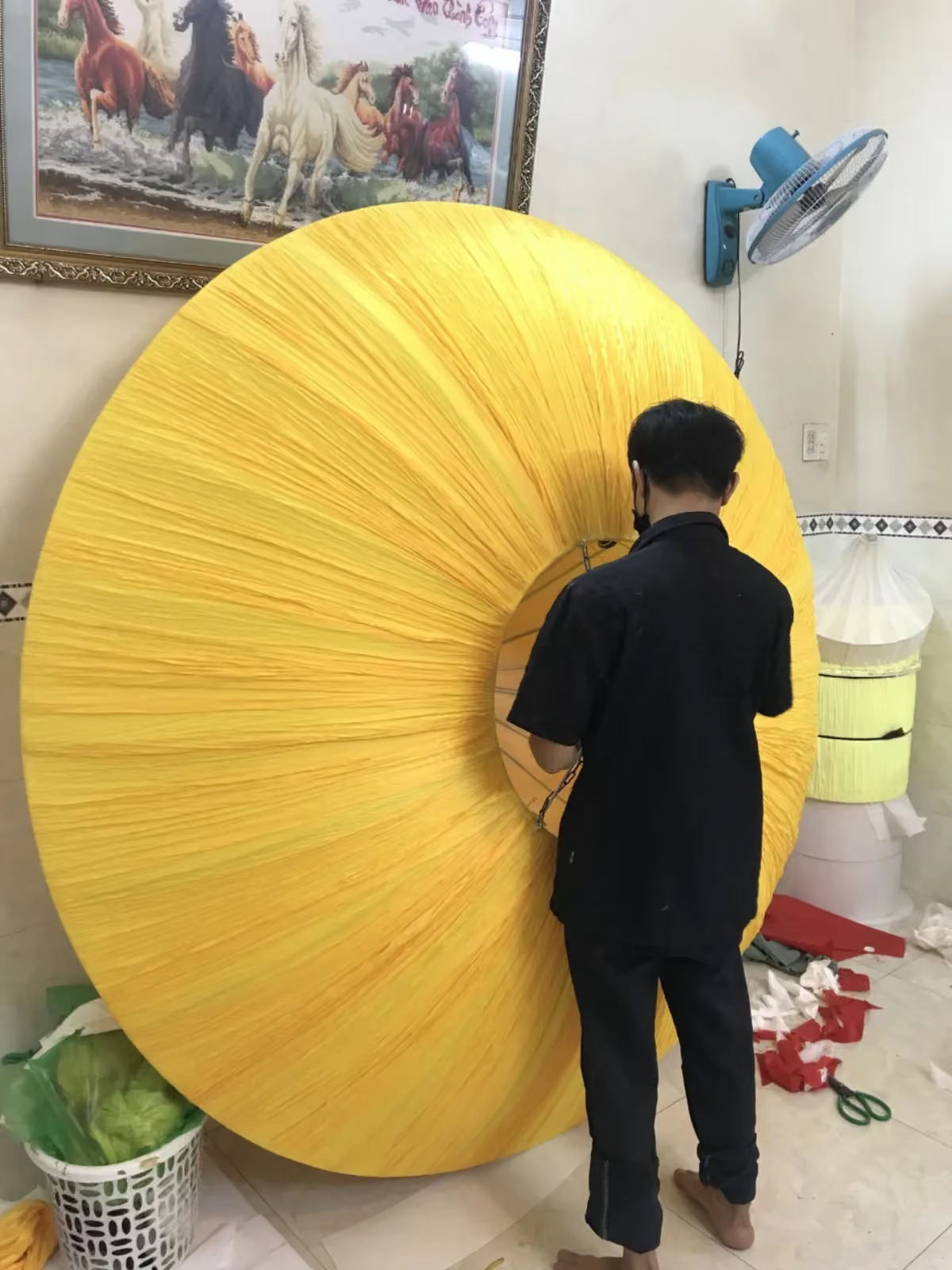
A wabi-sabi shade is allowed to show how it was made. A visible seam, a slightly uneven weave or a faint difference in tone between two shades are part of the character. It is the reason handwork suits the style, because a machine tends to remove such differences and the room feels less personal.
Spacing follows the same idea. Three shades hung at exactly equal intervals look formal, and a row hung a little unevenly looks relaxed. If you are ordering several, ask for the same cloth and let small variations in the weave do the rest. A sample is made before any run so you can see the variation first.
Colour follows the same logic. Earth tones, ochre, charcoal and undyed cream sit quietly in low light, and a frame in a matching powder-coat colour keeps the whole fitting calm. Bright or high-gloss colours tend to look louder once the lamp is on, so it is worth checking a swatch with a bulb behind it before you commit to a run.
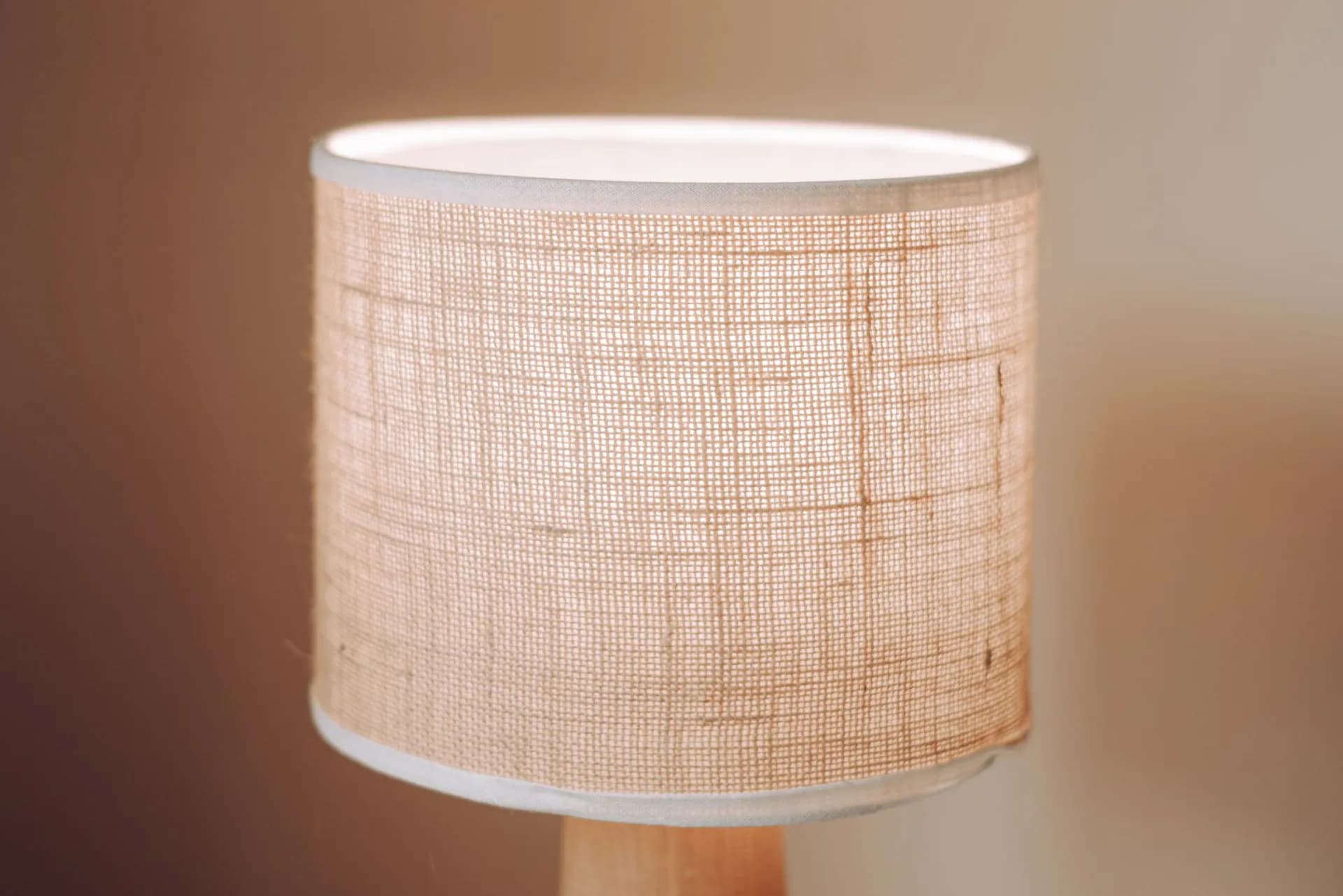
Natural cloths change slowly. Raw tussah silk and the linens can drift a little in colour over the years, and that is welcome in this style. The chart shows the expected life indoors for each cloth, from three to seven years depending on the material.
Dust the shade with a soft brush or a dry cloth. The cloth is not washable, and water will mark it. Keep the lamp out of direct afternoon sun. If a shade eventually wears out but the frame is sound, re-shading the frame costs about 80–90% of the price of a new shade, all-in.
Source: KAHA fabric list (kaha-fabric-types.json). Indoor use; dust with a soft brush, the cloth is not washable.
For one or two lamps, send a photo of the room and the base or ceiling and tell us the cloth you like. For a hotel, spa or restaurant run, custom work usually starts at 10 pieces per design in Vietnam and 50 for export. A finished sample usually takes 7 days. Fabric swatches are free, and a finished sample is charged at its value, except for hotel projects, where it is free.
We can match a frame colour from the 28 powder-coat colours, and Pantone matching is available on request, so a charcoal or earth-tone frame can sit with the cloth. If the room is part of a larger hospitality scheme, see our page on hospitality lighting. To compare with another cloth family, read the guide to silk lampshades.
Next step
Japanese wabi-sabi fabric lamps
Rough linen, raw tussah silk and earth-tone frames, made to measure with free fabric swatches.
Questions
A warm white LED, dimmed low, within the 20 W maximum per shade. As general guidance, a cool daylight bulb works against the mood of the style, and a dimmer on the circuit lets you lower the light further in the evening.
Raw tussah silk is the usual first choice because the hand weave is irregular. Fleck linen and natural linen are close behind, and heavy canvas suits a more rustic room.
Yes. Send a drawing, a photo of the room or a size, and we suggest a shape and a cloth and make a sample first. Custom work usually starts at 10 pieces per design in Vietnam and 50 for export, and a single catalogue piece can be ordered from one.
Natural cloths can drift in colour with sun and age. Indoors, our cloths last roughly three to seven years depending on the material. The warranty is 12 months for indoor use.
No. The cloth is not washable, and water will mark it. Dust it with a soft brush or a dry cloth, working along the grain, and keep the lamp out of direct afternoon sun.
Keep reading